2026 Best Light Filter for Global Buyers?

Choosing the 2026 Best Light Filter for Global Buyers is not a simple ranking exercise. A filter that performs beautifully in a laboratory may disappoint under harsh sunlight, dusty air, or repeated cleaning. Buyers must compare wavelength control, transmission, surface durability, temperature stability, and verified test data. The real question is practical: will the Light Filter maintain its performance after months of daily use?

Angus Macleod, a respected authority in optical thin-film coatings, wrote, “The design of an optical coating is an art as well as a science.” His observation remains valuable for modern purchasing decisions. A technically impressive filter still needs careful manufacturing, consistent coating thickness, and clear quality documentation. Look for measured spectral curves, independent testing, traceable production records, and application-specific recommendations. Ask about sample approval before placing a large order. Small details matter.

There is no universal best choice. Not even close. A filter for machine vision may need sharp infrared blocking, while architectural glazing may prioritize visible comfort and solar control. Some suppliers provide attractive specifications but limited evidence from real installations. That gap deserves attention. Global buyers should also examine packaging, replacement support, communication quality, and delivery reliability. These factors rarely appear in product brochures, yet they influence ownership costs. This guide compares leading options through performance, experience, technical credibility, and supplier transparency, while admitting one uncomfortable truth: even a well-researched decision can require adjustment after field testing.
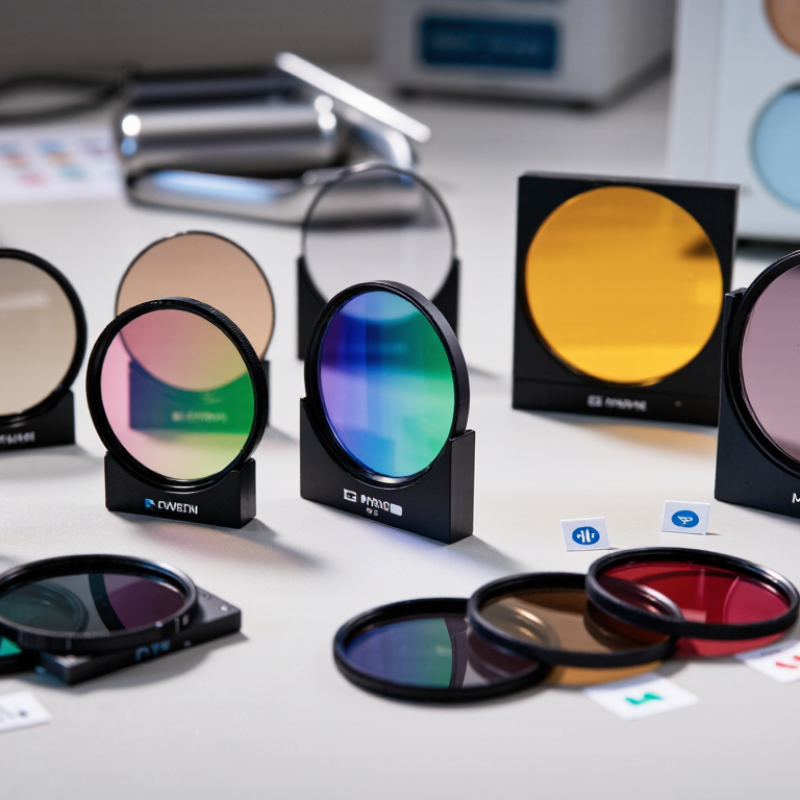
2026 Best Light Filter for Global Buyers?

What Is a Light Filter and What Does It Do?

A light filter is an optical component that controls which parts of light can pass through. It may reduce brightness, change color, or block unwanted wavelengths. The filter does not create light. It reshapes the light reaching a camera, sensor, microscope, or human eye.

In practical testing, a neutral-density filter lowers intensity without greatly changing color. A color filter passes selected wavelengths and absorbs others. UV and infrared filters manage radiation outside visible vision, but their performance depends on measured transmission data. I look for spectral curves, optical density, surface quality, and heat tolerance before choosing one. Numbers matter here.

Small details can change results. A filter may perform differently at an angle, under strong illumination, or across a wide temperature range. I once treated a dark filter as automatically superior. That was a poor assumption. Excessive filtering can hide useful detail and weaken sensor accuracy. A scratched surface can also scatter light across an image.

For global buyers in 2026, the best light filter depends on the application, wavelength range, and equipment. Photography may require controlled exposure. Industrial inspection may need narrow spectral selection. Laboratory work often demands documented calibration and stable materials. A filter sold for visual comfort should not be treated as certified eye protection unless its safety standard is clearly verified. Product drawings, test reports, and consistent specifications are more reliable than appearance alone.

How Different Light Filter Types Compare

Choosing the best light filter in 2026 depends on the spectrum, not the sales label. Global buyers should compare transmission curves, rejection ranges, heat tolerance, and testing methods. A filter that looks neutral on a showroom wall may shift colors under sunlight.

Absorptive glass filters reduce selected wavelengths through tinted material. They are generally simple and cost effective, but absorbed energy can create heat. Interference filters use thin optical layers to reflect targeted wavelengths. They can deliver sharper cutoffs, though performance may change with viewing angle. Neutral-density filters reduce overall intensity without strongly changing color, while UV or infrared filters target specific spectral bands. Polarizing filters reduce reflected glare, but their effect depends on surface direction and light angle.

Testing details matter. ISO 9050 provides methods for measuring solar and visible transmittance in glazing materials. ASTM E903 also evaluates solar absorptance, reflectance, and transmittance. These figures reveal more than a product photograph. The 2023 International Energy Agency Energy Efficiency report identifies lighting as roughly 15% of global electricity use, so unnecessary heat and transmission losses deserve attention. CIE colorimetry guidance also reminds buyers that visible color performance requires measured spectral data, not only a stated color temperature. No filter wins every application. I would request a spectrophotometer report, durability data, and samples under real daylight before placing a large order. Some specifications still look convincing until installation.

2026 Best Light Filter for Global Buyers? How Different Light Filter Types Compare

This comparison uses typical optical light reduction measured in photographic stops. UV and clear filters mainly protect the front element and usually have negligible visible-light reduction. Polarizing filters commonly reduce light by about 1–2 stops, while neutral-density filters provide predictable exposure control: ND2, ND4, ND8, ND16, and ND64 reduce light by 1, 2, 3, 4, and 6 stops respectively. Choose the filter according to the required light control, color neutrality, and application.

Which Light Filter Features Matter for Global Buyers?

For global buyers, a light filter must solve more than brightness problems. It should match the application, climate, and local installation conditions.

Check its wavelength range and transmission rate before comparing prices. A filter for visible light may not control ultraviolet or infrared energy. Optical density also matters. A darker filter is not automatically a safer or better choice. Look for measured performance data from an independent laboratory, not only seller descriptions. Clear test reports build trust.

Material durability is equally important. Glass, coated polymer, and laminated films respond differently to heat, moisture, and repeated cleaning. In coastal regions, salt exposure can damage weak coatings. In dusty areas, a smooth, scratch-resistant surface saves maintenance time. Confirm the filter’s size, mounting method, and compatibility with existing equipment. Small gaps can create unwanted glare.

Ask whether the supplier provides batch records, installation guidance, and replacement information. Documentation may differ across countries, so buyers should verify applicable safety and product requirements locally. A reliable filter should also survive realistic temperature changes and transport vibration. That detail is often missed. Perfect performance is unlikely in every environment. Buyers may need to balance light reduction, color accuracy, lifespan, and cost. A careful trial sample can reveal problems that specifications overlook.

How to Choose the Best Light Filter for Your Application

Choosing the Best Light Filter for Your Application

The best light filter depends on your light source, detector, and working environment. A filter for imaging may fail in spectroscopy or industrial inspection. Define the target wavelength before comparing materials. Check transmission, blocking range, optical density, and surface quality. A small mismatch can create false readings.

Tips: Measure the source spectrum when possible. Confirm the filter’s angle of use. Light entering at an angle may shift the effective wavelength. Also inspect temperature limits, humidity exposure, cleaning methods, and mounting space. A filter should fit the equipment, not only the specification sheet.

Experienced engineers usually test a sample under real operating conditions. Compare signal strength, unwanted light, image contrast, and long-term stability. Keep records from different lighting levels. This makes future decisions more reliable. There is no universal best filter. Sometimes, a cheaper option performs better because the application needs wider transmission. That result may feel unexpected, but testing matters more than assumptions. Be careful with supplier data, especially when measurements use different instruments or conditions. Ask for traceable test information and verify critical results independently.

What to Check Before Buying and Importing a Light Filter

2026 Best Light Filter for Global Buyers?

What to Check Before Buying and Importing a Light Filter

Choosing a light filter requires more than comparing prices. Check the exact wavelength range, transmission rate, blocking range, and optical density. A filter may look clear while reducing the wrong part of the spectrum. Request a current technical datasheet and an independent test report when accuracy matters. Confirm glass or polymer material, surface coating, thickness, diameter, and tolerance. These details affect performance, installation, and breakage risk during transport.

Tips: Order samples first. Test them with your own light source, detector, and mounting system. Ask the supplier for production photos, inspection records, packaging details, and replacement terms. Confirm whether the quoted price includes protective cases, export packing, and documentation. Import paperwork should match the product description, quantity, declared value, and applicable tariff classification. Requirements vary by destination, so verify them with a qualified customs professional before shipment.

Do not rely on a perfect-looking sample alone. Batch consistency can change after coating, cutting, or heat exposure. Request results from several production pieces, not only one. Check carton dimensions and shock protection; a thin filter can arrive scratched despite careful handling. I would also confirm lead time in writing, because “ready to ship” sometimes means only the raw material is available. Some buyers skip this step. It can create expensive delays. Be cautious with unclear test units, missing tolerances, or promises without measurable data.

2026 Best Light Filter for Global Buyers? - What to Check Before Buying and Importing a Light Filter

Filter Type Typical Spectral Range Main Function Typical Transmission Blocking / Optical Density Common Substrate Typical Applications Key Buying Check
UV-Pass Filter Approximately 200–400 nm Passes ultraviolet radiation while reducing visible and infrared light Often 30%–80%, depending on wavelength and coating design Visible-light blocking commonly OD 2–5 Fused silica, UV-grade quartz, or specialty optical glass UV imaging, fluorescence systems, laboratory instruments, curing equipment Confirm the usable UV band, angle-of-incidence performance, surface quality, and UV exposure durability
UV-Cut / UV-Blocking Filter Typically blocks below 380–420 nm Reduces ultraviolet transmission while preserving most visible light Usually 85%–95% in the visible passband UV blocking commonly OD 3 or higher in the specified range Optical glass, fused silica with coating, or polymer optical material Camera protection, lighting systems, sensors, document and artwork protection Request a spectral transmission curve rather than relying only on a “UV protection” label
Blue-Light Filter Usually attenuates selected wavelengths around 400–500 nm Reduces selected blue or violet-blue wavelengths Visible transmission commonly 60%–95%, depending on attenuation level Attenuation may range from less than 1 optical density to more than OD 2 at selected wavelengths Coated optical glass, polymer film, or laminated optical material Displays, task lighting, visual instruments, optical sensors Check the exact blocked wavelengths, color shift, luminous transmission, and glare performance
Visible Bandpass Filter Common passbands include 400–700 nm, with narrower bands also available Passes a defined visible wavelength band and rejects light outside it Peak transmission commonly 60%–90% Out-of-band blocking commonly OD 3–6 Optical glass, fused silica, or multilayer-coated substrate Color measurement, fluorescence, spectroscopy, machine vision Verify center wavelength, full width at half maximum, peak transmission, and blocking range
Longpass Filter Passes wavelengths longer than a selected cut-on wavelength Blocks shorter wavelengths and transmits longer wavelengths Typically 80%–95% above the passband Short-wavelength blocking commonly OD 3–5 Optical glass, fused silica, or coated crystalline substrate Fluorescence separation, spectroscopy, infrared imaging, sensor protection Specify the cut-on wavelength at a defined transmission level, such as 50% transmission
Shortpass Filter Passes wavelengths shorter than a selected cut-off wavelength Blocks longer wavelengths and transmits shorter wavelengths Typically 80%–95% below the passband Long-wavelength blocking commonly OD 3–5 Optical glass, fused silica, or multilayer-coated substrate Fluorescence systems, visible-light imaging, spectral separation Check cut-off tolerance, angle sensitivity, polarization effects, and humidity resistance
Infrared-Cut Filter Transmits most visible light and blocks near-infrared, commonly above 700–750 nm Prevents infrared contamination in visible imaging and color measurement Visible transmission commonly 85%–95% Near-infrared blocking commonly OD 3–5 Optical glass or multilayer-coated glass Digital cameras, machine vision, color sensors, optical measurement Request transmission data from approximately 350 to 1,100 nm when used with electronic imaging sensors
Neutral Density Filter Broadband attenuation across a defined wavelength range Reduces light intensity without intentionally changing spectral balance Common nominal levels: 50%, 25%, 10%, 1%, and 0.1% Typical optical densities: OD 0.3, 0.6, 1.0, 2.0, and 3.0 Absorptive glass, metallic-coated glass, or dielectric-coated substrate Laser attenuation, imaging, photometry, lighting and laboratory testing Confirm wavelength range, uniformity, laser damage threshold, heat absorption, and reflected-light direction
Laser Line Filter Narrow passband centered on a specified laser wavelength Passes a laser line while rejecting ambient and background light Peak transmission commonly 50%–90% Out-of-band blocking commonly OD 4–6 or higher Fused silica or precision-coated optical glass Raman systems, fluorescence detection, alignment, laser measurement Specify center wavelength, bandwidth, laser incidence angle, power density, and damage threshold

Note: The values above are typical specification ranges for optical filters. Actual performance depends on coating design, substrate, wavelength, angle of incidence, temperature, and measurement method. A formal spectral test report should be requested for the exact production batch.

Import and Purchasing Dimension What to Check Before Ordering Recommended Acceptance Requirement Potential Risk if Missing
Spectral performance Center wavelength, passband, cut-on or cut-off wavelength, transmission, blocking range, and optical density Approved spectral curve with test conditions and tolerances The filter may pass unwanted light or fail to protect the sensor or detector
Dimensions and fit Diameter or length and width, thickness, edge finish, mounting method, aperture, and dimensional tolerance Dimension drawing with tolerances and a first-article inspection sample Installation failure, light leakage, mechanical stress, or costly modification
Surface and material quality Surface quality, flatness, wedge, scratch-dig level, inclusions, chips, coating pinholes, and haze Defined inspection standard, sample size, lighting condition, and defect limits Image distortion, scattering, reduced contrast, or coating failure
Environmental durability Operating temperature, humidity, salt exposure, chemical resistance, UV exposure, and cleaning compatibility Documented environmental test method and defined warranty conditions Delamination, discoloration, corrosion, or transmission drift during use
Laser and heat safety Incident wavelength, power density, beam diameter, exposure duration, absorption, and damage threshold Written damage-threshold data for the exact filter construction Thermal cracking, coating damage, fire hazard, or unsafe reflected radiation
Documentation Technical datasheet, drawing, material declaration, inspection report, packing list, invoice, and country-of-origin information Documents must match the product description, quantity, dimensions, and shipment Customs delays, incorrect duty assessment, or difficulty resolving quality claims
Packaging and transport Individual protective packaging, shock protection, humidity control, orientation marks, and carton strength Packaging validation for fragile optical components and pre-shipment photos Scratches, cracks, coating abrasion, moisture damage, or transit claims
Trade classification and compliance Confirm the applicable customs classification, import permits, local product rules, taxes, and destination-country requirements Use the importer’s customs broker or local authority for final classification confirmation Unexpected duty, clearance delay, seizure, or non-compliance penalties
Total landed cost Unit price, tooling, coating setup, inspection, packaging, freight, insurance, duties, taxes, and replacement cost Compare suppliers using the same specification and complete landed-cost calculation A low purchase price may result in a higher final cost or unacceptable failure rate