
7 Best Automatic Diaper Making Machines for Buyers
Choosing an Automatic Diaper making machine is a production decision, not simply a search for the highest speed. Grand View Research estimated the global baby diaper market at USD 72.4 billion in 2022 and projected a 5.3% compound annual growth rate from 2023 to 2030 in its Baby Diapers Market report. This market estimate covers products, not machinery sales, but it signals sustained demand for reliable manufacturing capacity. Demand is real. Buyers still need to match equipment to their own product plans.
This guide compares seven machines through practical criteria: rated output, product flexibility, changeover time, automation, material waste, and service support. A line may advertise impressive hourly production, yet actual output depends on product size, operator skill, maintenance, and material quality. That difference matters. Picture a shift change, a roll splice, or a brief stoppage at the packing end; small delays can reshape a day’s production target. Buyers should request trial-run data, utility requirements, spare-parts lists, and references from comparable factories. They should also confirm which diaper formats and absorbent-core designs each line can produce. No single machine suits every plant. Even a detailed comparison cannot replace a factory visit or a careful review of the supplier’s technical documents. Some figures remain difficult to verify independently, so treat headline speeds as starting points, not guarantees. The seven options below are intended to help buyers ask sharper questions before committing capital.
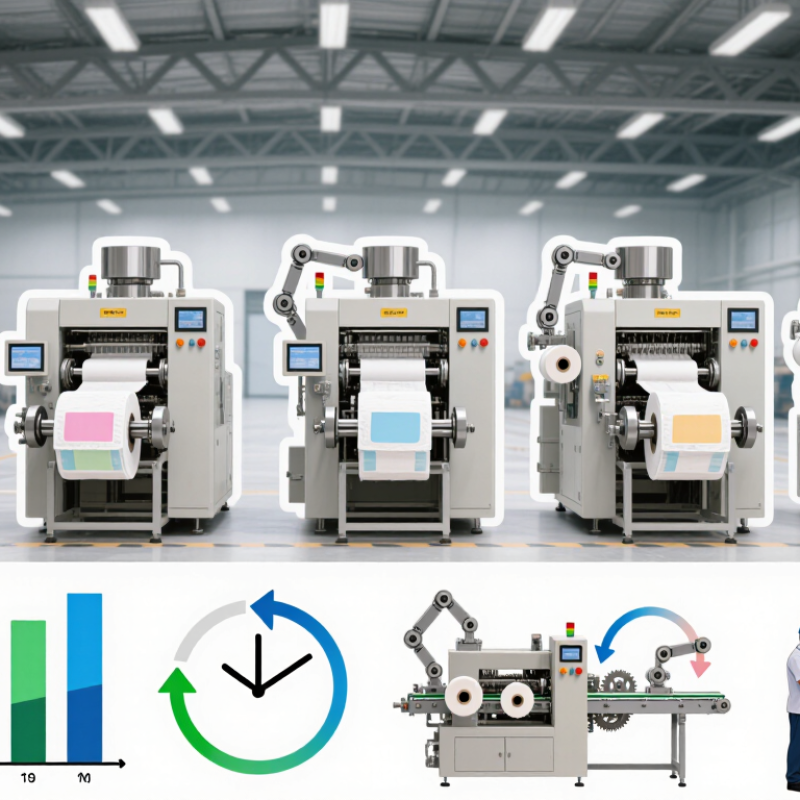
How Automatic Diaper Making Machines Work
An automatic diaper line turns several material webs into a shaped, sealed product. Rolls of topsheet, backsheet, tissue, and elastic feed into unwind stands, where tension controls help prevent wrinkles and breaks. A forming drum shapes the absorbent core from fluff pulp and superabsorbent polymer. The layers then meet in a set order: core, soft topsheet, and leak-resistant backsheet. Adhesive bonds them, while rotary cutters form the outline and add leg openings. Small details matter.
Sensors track web position, tension, and cut timing. If a layer shifts, the diaper may have uneven cuffs or an exposed core. A vision system can flag defects, but it cannot make poor incoming material consistent. According to EDANA’s 2022 European Nonwovens Production and Deliveries report, European nonwoven production totaled about 2.93 million tonnes. That figure is not diaper-specific, but it shows the scale of the material sector feeding hygiene lines. After forming, the machine folds and counts diapers for packing. Operators still need to check samples, adjust settings, and investigate recurring rejects. Automation reduces repetitive handling. It does not remove judgment. A practical limitation: even a fast line can lose output when changeovers or material variation are poorly managed.
7 Best Automatic Diaper Making Machines for Buyers - How Automatic Diaper Making Machines Work
| Machine Type | Typical Output Range | Products Made | How the Line Works | Best Suited For | Buyer Checks |
|---|---|---|---|---|---|
| High-Speed Baby Tape-Diaper Line | Approximately 600–800 pieces per minute | Taped baby diapers in multiple sizes | Unwinds nonwoven, film, tissue, and elastic materials; forms and applies the absorbent core; adds leg cuffs and fastening tabs; then cuts, folds, and counts finished diapers. | Large-volume producers with established demand and experienced technical staff. | Confirm rated speed for the required size range, changeover time, reject rate, and whether downstream packing is included. |
| Standard-Speed Baby Tape-Diaper Line | Approximately 300–600 pieces per minute | Taped baby diapers across common size ranges | Uses coordinated unwinding, core forming, component placement, cutting, folding, and counting stations, typically with automatic tension and registration controls. | Mid-sized manufacturers balancing production capacity with investment and operating complexity. | Check the guaranteed output on the intended product, material consumption, tooling requirements, and operator training. |
| Compact Baby Tape-Diaper Line | Approximately 150–300 pieces per minute | Taped baby diapers, often with a narrower range of sizes or designs | Performs the same core converting steps as larger lines, but at a lower production rate and with a more compact configuration. | New manufacturers, regional suppliers, and buyers testing a market before scaling up. | Assess upgrade options, available floor space, manual intervention points, and access to spare parts. |
| Baby Diaper-Pants Line | Approximately 300–600 pieces per minute | Pull-on baby diaper pants | Forms an absorbent core and elasticized side panels, joins the waist and side seams, cuts individual pants, and folds and counts them. | Producers targeting pull-on products and consumers who prefer underwear-style diapers. | Verify waist-elastic performance, seam strength, size-change tooling, and output at the required product specification. |
| Adult Tape-Brief Line | Approximately 100–250 pieces per minute | Taped adult incontinence briefs | Feeds wider materials through core forming and component-application stations, then adds leg elastics and fastening systems before cutting, folding, and counting. | Manufacturers serving adult-care and institutional markets. | Review product dimensions, core capacity, fastening-tab options, material widths, and the line’s actual speed on larger sizes. |
| Adult Pull-On Pants Line | Approximately 100–200 pieces per minute | Pull-on adult incontinence pants | Builds the absorbent product, forms elasticized waist and leg openings, joins side seams, and cuts and folds the finished pants. | Buyers producing underwear-style adult-care products in a defined size range. | Check seam quality, elastic placement, size-change procedures, and whether the quoted speed applies to the largest size. |
| Absorbent Underpad Line | Approximately 200–600 pieces per minute | Disposable bed and care underpads | Laminates absorbent layers with a liquid-resistant backing, cuts the web to length, and stacks or counts the finished pads. | Producers supplying healthcare, caregiving, and household-use markets. | Confirm pad dimensions, layer options, cutting accuracy, stacking method, and compatibility with the chosen packaging equipment. |
Output figures are indicative ranges for different line configurations, not guaranteed production rates. Actual output depends on product size and design, raw-material characteristics, changeovers, operating conditions, and the scope of the supplied line. Request a product-specific acceptance test and clarify whether packaging equipment is included.

© 2025 EXCELSIUS MEDICAL All rights reserved