Choosing a China-based Light For Eye supplier requires more than comparing prices and polished product photos. Global buyers need evidence of stable quality, careful engineering, and responsible manufacturing. This guide examines how qualified suppliers develop eye-focused lighting products for offices, retail spaces, schools, and residential projects. It also considers communication, documentation, customization, and export support.
Technical details matter. Buyers should review brightness, color temperature, color rendering, flicker performance, glare control, and thermal management. Photobiological safety testing should match the product and intended application. Relevant certificates and laboratory reports must be checked carefully, not accepted at face value. Samples can reveal visible issues, such as uneven light, harsh reflections, loose wiring, or inconsistent finishes. Small details speak loudly.
Supplier experience is equally important. A dependable factory can explain LED selection, optical design, aging tests, quality inspections, and packaging protection. It should provide clear specifications and realistic production timelines. Factory audits, video inspections, and third-party testing may reduce uncertainty. Yet no sourcing process is perfect. A strong website does not guarantee strong production. Even experienced buyers can miss changes between samples and mass orders.
Reliable partnerships develop through transparent questions and measurable standards. Buyers should request quality-control records, warranty terms, replacement procedures, and shipment references where appropriate. They should also confirm compliance requirements in the destination market. This overview helps global purchasers compare China’s Light For Eye suppliers with greater confidence, while recognizing that every project has different visual, technical, and commercial needs. Better decisions come from verification, not assumptions.
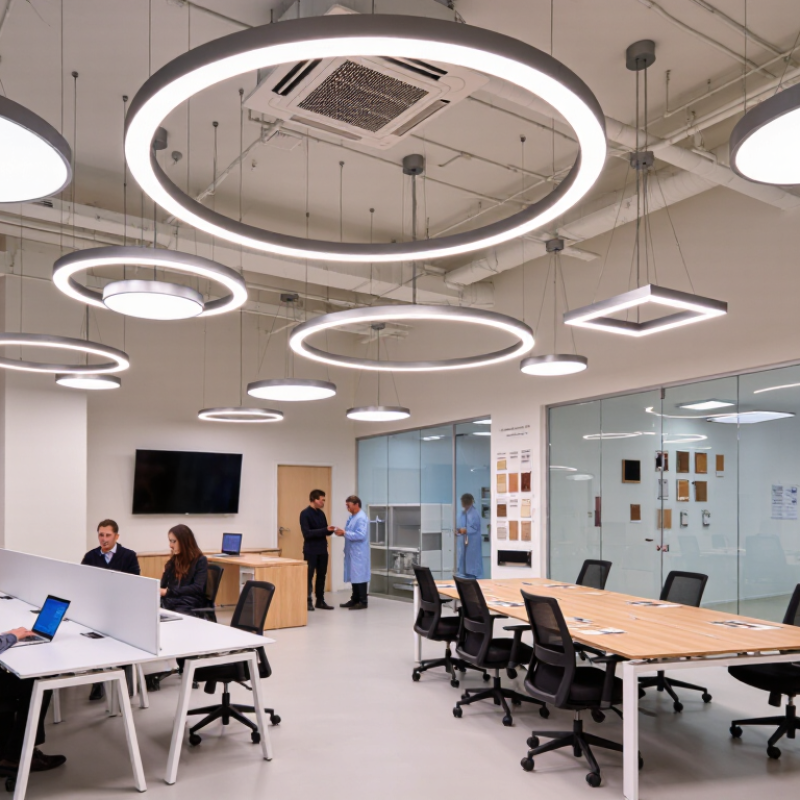
China’s role in the global eye-light supply market is expanding through efficient manufacturing, flexible customization, and mature component networks. Eye-care lighting includes examination lamps, task lights, and low-glare systems for clinics, laboratories, and homes. The WHO’s World Report on Vision (2019) estimates that at least 2.2 billion people have vision impairment worldwide. About 1 billion cases could have been prevented or remain unaddressed. This creates demand for dependable illumination, not simply brighter lamps.
China remains a major export base for lighting equipment under HS 9405, according to UN Comtrade trade data. The International Energy Agency has reported that lighting uses about 15% of global electricity. Therefore, buyers increasingly request efficient LEDs, stable color rendering, controlled glare, and longer service life.
Experienced suppliers should provide photometric files, illuminance tests, color-temperature data, and traceable quality records. For clinical products, buyers should also review applicable electrical and medical-device requirements. Compliance claims need evidence. A certificate alone is not enough.
Tips: Ask for a sample before bulk purchasing. Test shadows, flicker, heat, and cleaning resistance in a real room. Check whether measurements follow recognized standards. China’s supply chain is capable, but the market is not perfectly measured. Some suppliers describe general lighting as eye-care lighting without sufficient testing. That gap deserves attention.
China has become a practical sourcing base for eye-protection lighting, especially for industrial and commercial buyers. The International Energy Agency reports that lighting uses about 15% of global electricity. Efficient LED designs can therefore reduce operating demand while improving visual comfort.
Key products include low-glare LED panels, adjustable task lamps, and uniform machine-vision lights. Panels with deep optical diffusers help reduce harsh reflections on screens and polished worktops. Ring and bar lights support inspection lines, where stable illumination matters more than decorative appearance. High-CRI inspection lamps reveal surface colors more accurately, helping workers notice scratches, stains, and assembly defects. Buyers should request photometric files, flicker measurements, and test samples.
Flicker-controlled drivers are another important category. IEEE 1789 provides guidance for reducing potential biological risks from LED flicker, while IEC 62471 evaluates photobiological safety. The U.S. Department of Energy has also documented major LED efficiency gains, though real performance depends on heat management and driver quality. A “blue-light safe” claim alone is not enough. It may still create glare or poor color judgment. I have seen specifications look impressive until a sample exposed uneven brightness at the workbench. Global buyers should compare UGR, CRI, CCT, flicker percentage, lifetime testing, and compliance documents before placing volume orders.
Typical maintained illuminance levels for common eye-comfort lighting applications. These reference values are aligned with commonly used EN 12464-1 practice and may vary according to the final project specification.
Higher illuminance is generally required for detailed visual tasks such as reading, office work, and classroom activities, while circulation areas require lower levels. LED desk lamps, panel lights, linear lights, anti-glare downlights, and retail track lights are widely used product categories for these applications.
China Top Light For Eye Supplier for Global Buyers
Quality standards should guide every purchase of China-made eye care lighting. A reliable supplier should provide photobiological safety test reports, not only attractive product photos. Check blue-light risk, ultraviolet output, flicker, glare, and heat control. Test results should match the exact model and production version. A high CRI number alone is not enough. Stable color temperature also matters when users read, work, or rest for long periods.
In practical supplier reviews, buyers should inspect LED bins, driver quality, diffuser materials, and assembly consistency. Ask for samples from different production batches. Measure brightness, flicker, and surface temperature after several hours. Standards such as IEC 62471, IEC 60598, and relevant market requirements can support technical evaluation. However, compliance depends on the destination country. A polished report may still miss real factory variation, so independent verification remains valuable. I have found that simple records often reveal more than confident sales claims.
Tips: Request complete test reports, inspection photos, and a written quality plan. Confirm warranty terms and replacement procedures before ordering. Compare measured data with the supplier’s specifications. Do not judge comfort from brightness alone. Human eyes respond differently, and some product claims need deeper review. A small trial order can expose uneven color, buzzing drivers, or weak packaging before a larger shipment.
| Quality Dimension | Recommended Buyer Requirement | Reference Standard or Method | Verification Evidence |
|---|---|---|---|
| Illuminance | 500 lux maintained average for reading, study and general office desk tasks; confirm the actual level at the working plane. | EN 12464-1:2021 commonly specifies 500 lux for office reading, writing and data-processing areas. | Independent photometric report, test-room layout, working-plane height and illuminance map. |
| Illuminance Uniformity | Uniformity ratio U0 ≥ 0.60 for the defined task area; avoid strong bright and dark patches. | Calculate minimum illuminance divided by average illuminance across the specified measurement grid. | Grid-based lux measurements with the luminaire installed at the intended mounting height. |
| Unified Glare Rating | UGR ≤ 19 for computer, reading and detailed visual tasks where the room layout supports this limit. | EN 12464-1:2021; UGR depends on luminaire optics, room geometry, reflectance and observer position. | UGR calculation using photometric files, room dimensions and surface reflectances; review glare-control design. |
| Colour Rendering | General minimum Ra ≥ 80; target Ra ≥ 90 for premium eye-care, reading and colour-sensitive applications. | CIE 13.3 and IEC 62717 measurement principles; the required value should match the application. | LM-79-style integrating-sphere or goniophotometer report showing Ra and individual colour-rendering values. |
| Correlated Colour Temperature | Offer stable options such as 3000 K, 4000 K and 5000 K; use 3000–4000 K where a warmer visual environment is preferred. | CIE 15 colourimetry principles; specify tolerance, commonly within ±5% or the agreed product bin. | Spectral test report and production sampling records for CCT consistency. |
| Temporal Light Modulation | Prefer low-flicker operation; target percent flicker ≤ 5% and flicker frequency above 3 kHz under rated conditions. | IEEE 1789 provides guidance for reducing risks from flicker; assessment should cover dimming levels and mains conditions. | Oscilloscope or calibrated flicker-meter results at 100%, 50% and minimum dimming output. |
| Blue-Light Photobiological Safety | Risk Group 0 or Risk Group 1 for normal intended use; do not make medical or eye-disease prevention claims without clinical evidence. | IEC 62471 and IEC TR 62778 for photobiological safety and blue-light hazard assessment. | Photobiological safety report identifying risk group, measurement distance and operating conditions. |
| Photometric Performance | Declare initial lumen output, beam distribution, input power and power factor; require measured values within the agreed tolerance. | IES LM-79 or an equivalent internationally recognized electrical and photometric test method. | Third-party or accredited laboratory report, IES/LDT photometric file and product datasheet. |
| Electrical and EMC Safety | Product design should address electrical safety, electromagnetic compatibility, surge protection and stable operation at the declared input range. | IEC 60598-1, IEC 61547, CISPR 15 and applicable IEC 61000 series requirements. | Electrical safety, EMC, surge and abnormal-operation test reports for the exact model. |
| Energy Efficiency | Specify system efficacy in lumens per watt at the complete-luminaire level, not only the LED-package level; set a project-specific minimum. | Applicable market requirements, including China GB 30255-2019 where relevant. | Complete-luminaire power and lumen measurements under rated operating conditions. |
| Lifetime and Reliability | Use an L70 lifetime declaration with ambient temperature, drive current, case temperature and maintenance assumptions clearly stated. | IES LM-80 for LED lumen maintenance data and TM-21 for projecting lumen maintenance; avoid treating rated life as a warranty period. | LED maintenance data, thermal design records, driver reliability information and warranty terms. |
| Materials and Environmental Compliance | Require documented control of restricted substances and traceable material declarations for the target export market. | Applicable RoHS requirements, REACH obligations and destination-market chemical regulations. | Declaration of conformity, material declarations, supplier traceability and random restricted-substance testing. |
| Factory Quality Management | Use documented incoming inspection, process control, final inspection, calibration and corrective-action procedures. | ISO 9001 quality-management principles; certification should be verified for the relevant manufacturing site and scope. | Quality manual, inspection plan, calibration records, batch traceability and pre-shipment inspection results. |
Choosing an eye-comfort lighting supplier in China requires more than comparing unit prices. Check the product’s measured flicker, color rendering, color temperature, glare control, and heat performance. Ask for recent laboratory reports, not only catalog values. A stable sample should match the production version, including LEDs, driver, diffuser, and housing.
Request a sample before discussing large volumes. Test it beside ordinary office lighting, under a camera, and during several hours of use. Look for visible pulsing, uneven brightness, harsh reflections, and excessive surface heat. Small details matter. A supplier should explain testing methods clearly. Vague answers deserve caution.
Review factory capability through production photos, process records, and quality-control checkpoints. Confirm incoming material inspection, aging tests, electrical safety checks, and final sampling procedures. Relevant certificates must match the exact model and target market. Also examine packaging, spare-part support, warranty terms, and response times. A polished factory tour can still hide weak batch control. That is an uncomfortable possibility.
Ask for a pilot order with agreed inspection standards. Define acceptable color variation, defect limits, delivery dates, and replacement procedures in writing. Reliable suppliers welcome reasonable questions and provide traceable documents. Communication quality is evidence too. If every answer changes, reconsider the partnership. Even experienced buyers can overtrust attractive samples; independent inspection remains worthwhile before shipment.
Sourcing and importing eye light products from China requires more than comparing unit prices. Define the product clearly before contacting suppliers. Specify illuminance, color temperature, color rendering, flicker performance, beam angle, and power requirements. For reading or desk use, adjustable brightness and controlled glare can improve visual comfort. However, no lamp can guarantee eye health.
Request technical datasheets, factory photographs, sample units, and recent test reports. A reliable supplier should explain LED specifications, driver quality, heat management, and expected service life. Ask for a sample with the same housing, cable, plug, and packaging used in mass production. Small differences matter.
Test the sample in a real workspace. Check shadows, surface temperature, switch response, and brightness consistency after several hours. Measure the light where the user sits, not only near the lamp. A bright sample is not enough. We once underestimated packaging space. The shipping cost increased noticeably. That mistake showed why carton dimensions must be confirmed early.
Before placing an order, verify production capacity, minimum order quantity, lead time, payment terms, and inspection procedures. Confirm destination-market requirements for electrical safety, labeling, documentation, and plug types. Requirements differ by country. Use an independent inspection when the order is important. Keep approved samples and written specifications for comparison during production. Clear records reduce disputes and make importing eye light products from China more predictable.
© 2025 EXCELSIUS MEDICAL All rights reserved
Taiwan Office
2F., No. 18, Ln.31, Sec.1, Huandong Rd.,
Xinshi Dist., Tainan City 744, Taiwan, R.O.C.
German Office
Zeppelinstr. 4, Haus 3&4,
D-85399 Hallbergmoos, Germany