
China Top Automatic Weigh Price Labelling Machines?

China has become a major source of Automatic Weigh-Price Labelling Machines for supermarkets, butcher shops, food factories, and distribution centers. These systems weigh products, calculate prices, and print labels during one controlled process. The details matter.

Packaging automation consultant Ralf Kluge explains, “A reliable labeler must make weight, price, and printed information agree every time.” His observation reflects a practical purchasing concern. A machine may appear fast on a showroom floor, yet struggle with wet trays, irregular portions, or changing label formats. Buyers should examine those conditions closely.

This introduction will compare China’s leading suppliers through measurable criteria. Accuracy, weighing capacity, labeling speed, software stability, printer quality, and cleaning access deserve attention. Stainless-steel frames and sealed components can simplify daily sanitation. Clear touchscreen controls can reduce training time. Remote technical support may prevent a small software fault from stopping production.

Supplier experience also matters. A strong manufacturer should provide test reports, sample labels, spare-parts guidance, and documented service procedures. Factory videos are useful, but they are not enough. An on-site trial tells a more honest story.

Some comparisons remain imperfect. Published speeds often depend on product shape, operator skill, and label size. That limitation should be admitted, not hidden. The best choice is rarely the cheapest machine. It is the system that maintains stable performance during ordinary, messy production days. This guide will help readers assess China’s top Automatic Weigh-Price Labelling Machines with practical judgment, careful verification, and realistic expectations.
China Top Automatic Weigh Price Labelling Machines?

What Are Automatic Weigh Price Labelling Machines?

Automatic weigh price labelling machines combine weighing, pricing, printing, and label application in one controlled process. A product arrives on a conveyor or platform. Load cells measure its weight, while software retrieves the correct price and product information. A printer then produces a label showing weight, unit price, total price, date, and traceability details.

This equipment is common in meat, seafood, produce, and prepared-food departments. It can reduce manual entry and keep labels consistent during busy shifts.

Fortune Business Insights valued the global packaging automation market at about USD 68.53 billion in 2023. That growth reflects stronger demand for faster, more connected production equipment.

The FAO also reported that 13.2% of food was lost between harvest and retail in 2021. Accurate weighing and date information cannot solve every loss, but they can support better stock control.

In practical use, operators still need clean platforms, stable power, and verified product data. A wet tray or overloaded scale can create an attractive but incorrect label. That is the weak point. Regular calibration and sample checks remain essential.

Automatic does not mean careless. A hurried setup may produce elegant errors at impressive speed.

Selecting a machine requires attention to weighing range, label size, print resolution, software integration, and cleaning access. The best specification on paper may fail beside a slippery conveyor.

How Automatic Weigh Price Labelling Machines Work

China Top Automatic Weigh Price Labelling Machines?

How Automatic Weigh Price Labelling Machines Work

Automatic weigh price labelling machines combine weighing, calculation, printing, and application in one production line. A product enters on a conveyor and rests briefly on a load cell. The sensor measures its weight, even when the item has an uneven shape. Software then matches the weight with stored product data, such as price per kilogram and item code.

The system calculates the final price automatically. It prints a label showing weight, unit price, total price, date, and traceability details. An applicator places the label on the package surface. Some systems use thermal printing, which produces clear text without ink cartridges. Barcode readers can confirm the correct product before labelling. This small check prevents expensive data mistakes.

In real operations, the process is not perfectly smooth. A wet tray may shift slightly, while a wrinkled label can reduce barcode readability. Operators should check calibration with certified test weights and clean the weighing platform regularly. Conveyor speed also needs careful adjustment. Too fast, and weighing becomes unstable; too slow, and output falls. I have found that simple daily inspections often reveal problems before customers do. Still, software settings require human review. Product dimensions, packaging changes, and price updates can make an accurate machine produce inaccurate labels. Reliable performance depends on both precise equipment and disciplined procedures.

The machine weighs each package, applies the programmed unit price, calculates the total price, and prints the product label. This chart shows the calculation at a unit price of USD 8.00 per kilogram.

Key Features of Modern Weigh Price Labelling Machines

Key Features of Modern Weigh Price Labelling Machines

Modern weigh price labelling machines combine accurate scales, product databases, and automatic label printing. In a busy food counter, an operator can place a tray on the platform, select the item, and receive a readable label within seconds. The system calculates weight, price, and total value together. This reduces repeated keying and helps limit pricing mistakes.

Accuracy depends on more than the load cell. Stable leveling, vibration control, suitable software, and regular calibration all matter. A clear touchscreen should work with wet gloves and changing product names. Useful machines also support barcode scanning, thermal printing, date fields, nutrition details, and adjustable label formats. Data can often move through Ethernet or wireless networks, helping managers update prices across several workstations.

Hygiene deserves equal attention. Smooth stainless-steel surfaces, sealed controls, and removable platforms make cleaning easier. Yet no machine stays accurate without care. Moisture, overloaded platforms, and rushed calibration checks can create problems. I have found that simple operator training often improves results more than extra features. The best setup matches the store’s workflow, label size, weighing range, and maintenance ability. A powerful system can still be a poor choice if staff find it confusing. Regular test weights and printed-label checks provide practical evidence before production begins.

Top Chinese Manufacturers and Machine Models

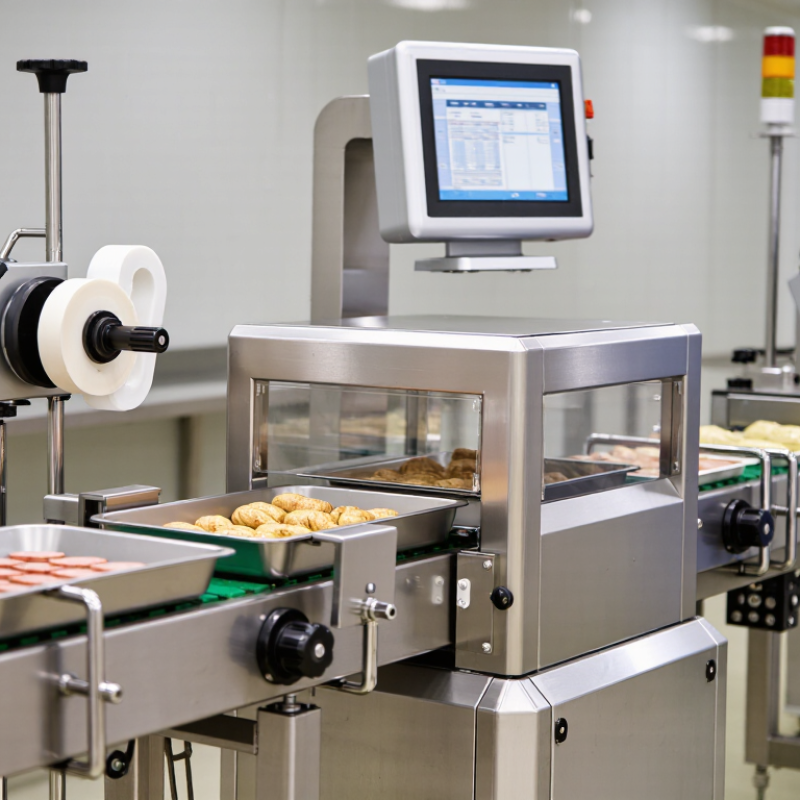
China’s top automatic weigh price labelling machines are built for supermarkets, food processors, and refrigerated packing rooms. Leading Chinese manufacturers usually offer compact bench models, inline conveyor models, and high-speed multi-lane systems. Each machine weighs products, prints a label, and applies it in one controlled cycle.

Compact models suit small meat, seafood, fruit, and prepared-food lines. Inline models connect with conveyors and reduce repeated manual handling. Multi-lane models support higher output, but they need stable product spacing and accurate feeding.

Common features include stainless-steel frames, touchscreen controls, barcode printing, automatic calibration, and data storage. Some manufacturers also provide custom conveyors for irregular packages. That flexibility helps. It can also increase maintenance difficulty.

Tips: Check weighing accuracy under real production conditions, not only empty-machine tests. Ask for sample labels, software language options, cleaning instructions, and spare-part availability. Confirm the model’s maximum package size before ordering. A machine rated for speed may perform poorly with wet trays or uneven products. This detail is often overlooked.

Reliable suppliers should provide factory testing, installation guidance, operator training, and documented inspection records. Request a video test using your actual products. Review sealing, label adhesion, print clarity, and reject handling. Chinese manufacturers may offer attractive customization, but unclear specifications can create delays. Leave space around the machine for cleaning and service access. The cheapest model is not always the safest investment. Performance should be judged over several production shifts, not one successful demonstration.

How to Choose the Right Machine for Your Business

China Top Automatic Weigh Price Labelling Machines?

Choosing the right automatic weigh price labelling machine starts with your daily production reality. Measure product sizes, average weights, line speed, and label changes. A compact machine may suit a small food workshop, while a high-output line needs stronger conveyors and faster printing. Do not choose by advertised speed alone. Test real products, including irregular items and slippery packaging.

Check weighing accuracy, printer resolution, label placement, and software controls. The machine should handle your required weight range without frequent manual correction. Ask for calibration records, operating instructions, spare-part availability, and remote support. Confirm that the system can connect with your existing scale, inventory software, or production line. Local measurement and labelling requirements also deserve careful verification.

Consider cleaning time and operator training. Stainless construction helps, but poor access points can still create hygiene problems. Ask to see the machine running before purchase. My first choice would not always be the fastest model. A slower unit may reduce rejected labels and product waste. I once underestimated changeover time; that mistake made the purchase look cheaper than it really was. Calculate total ownership costs, including maintenance, labels, training, electricity, and downtime. Leave room for future product sizes, even if your current range seems stable.

China Top Automatic Weigh Price Labelling Machines? - How to Choose the Right Machine for Your Business

Machine Configuration Typical Weighing Range Typical Speed Typical Accuracy Suitable Products Best Business Fit Main Advantages Important Limitations
Semi-Automatic Weigh-and-Label Station 10 g–30 kg 6–15 packages/min Typically ±1–5 g, depending on product and load cell Fresh meat, seafood, produce, bakery items and irregular products Small processors, retail counters and businesses with variable product sizes Lower investment, flexible product handling and simple operation Requires more operator involvement and has lower throughput
Intermittent Automatic Weigh-Price Labeller 20 g–10 kg 20–45 packages/min Typically ±1–3 g Trays of meat, poultry, seafood, prepared foods and produce Small and medium food factories with moderate production volumes Good balance of automation, accuracy and cost Less suitable for highly irregular products or very high line speeds
Continuous Weigh-Price Labelling Line 50 g–15 kg 40–80 packages/min Typically ±1–3 g Uniform trays, cartons and sealed packs with consistent spacing Medium and large processors requiring continuous production Higher throughput and reduced manual handling Needs stable product presentation, conveyor alignment and regular maintenance
Checkweigher with Automatic Price Labeller 20 g–30 kg 30–100 packages/min Typically ±0.5–2 g, depending on speed and product stability Pre-packed meat, chilled foods, frozen products and retail-ready packs Established production lines requiring weight verification and traceability Combines weighing, label application, reject control and production data Higher purchase cost and greater integration complexity
Multi-Lane Automatic Weigh-Price Labeller 50 g–5 kg per pack 80–200 packages/min, depending on lane count Typically ±1–3 g Uniform trays and packaged foods produced in large batches High-volume factories and centralized packing operations Very high output with efficient use of floor space Requires consistent pack dimensions, skilled setup and stronger service support
Specialty Fresh-Product Weigh-Price Labeller 30 g–10 kg 15–50 packages/min Typically ±1–5 g Irregular meat cuts, fish, vegetables and moisture-sensitive products Fresh-food processors that need hygienic handling and adaptable packaging Designed for wet environments, variable shapes and frequent product changes Usually slower than high-speed systems and may require customized conveyors
Selection Note: The figures above are typical industry ranges for comparison. Actual performance depends on product shape, temperature, moisture, package dimensions, label format, conveyor spacing, legal metrology requirements and the selected configuration. Confirm accuracy and throughput with product trials before purchase.

Key Buying Criteria

Evaluation Dimension What to Check Before Purchase Recommended Decision Rule
Product and Package Range Minimum and maximum weight, tray dimensions, product height, surface condition and spacing Choose a machine that covers the full operating range without running continuously at its limits
Required Throughput Target packages per minute, peak-season demand and future production growth Select rated capacity at least 15–20% above the normal production target
Weighing Accuracy Required tolerance, legal trade requirements, product movement and environmental vibration Use certified or legally approved equipment where weight is used to calculate the selling price
Label and Data Functions Barcode formats, variable weight data, allergens, nutrition fields, date coding and database connectivity Confirm support for required retail labels and integration with ERP, MES or inventory systems
Hygiene and Cleaning Stainless-steel construction, washdown rating, tool-free access and drainage design For wet or chilled foods, prioritize hygienic design and rapid cleaning over maximum speed
Total Cost of Ownership Machine cost, label material, spare parts, calibration, service, training and downtime Compare five-year operating cost rather than evaluating the purchase price alone