
What Is a Medical Light and What Types Are Available?
A Medical Light is more than a bright lamp. It is a purpose-designed source of illumination that helps clinicians see tissue, instruments, and examination details with greater clarity. Visibility matters. In an operating room, a deep surgical field calls for focused, adjustable light; at an examination couch, a clinician may need a smaller beam that can move quickly. The right choice depends on the task, room, and users—not simply brightness.
The scale of surgical care shows why dependable illumination matters. Weiser and colleagues estimated that 234 million major surgical procedures took place worldwide in 2004, in research published in The Lancet in 2008. That figure is a historical estimate, not a current annual count, but it illustrates the reach of surgical services. For equipment context, IEC 60601-2-41:2021 sets safety and essential-performance requirements for surgical luminaires and luminaires for diagnosis. A standard helps define expectations; it does not replace clinical judgment or careful product selection.
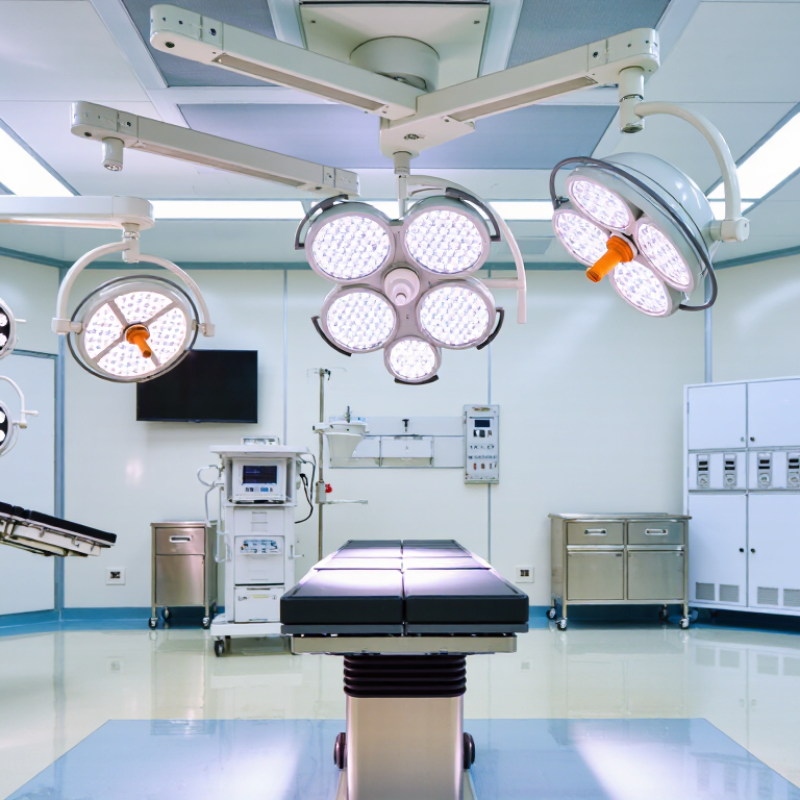
Available types include surgical lights for operating rooms, examination lights for clinics, and procedure lights for focused interventions. Dental lights, endoscopic illumination systems, and phototherapy units serve more specialized settings. Their designs differ in beam shape, mounting, adjustability, and intended use. Those details matter. A broad ceiling-mounted surgical light is not automatically the best choice for a small examination room. Nor does a feature list prove better clinical performance. Buyers should compare manufacturer specifications with the actual workflow and verify that devices meet applicable safety requirements. The category is broad, and labels can be confusing. Understanding the use case is a sound place to start.
Definition and Core Functions of Medical Lighting
What Is a Medical Light and What Types Are Available?
Definition and Core Functions of Medical Lighting
A medical light is a purpose-built lighting system that helps clinicians see tissue, instruments, and skin details clearly. Unlike ordinary room lighting, it directs controlled illumination toward a specific task. Its core functions include revealing color and surface detail, limiting shadows, and supporting visual comfort during examinations or procedures. Design also considers heat, glare, cleanability, and reliable positioning. Small details matter.
The IEC 60601-2-41:2021 standard covers the basic safety and essential performance of surgical and diagnostic luminaires. For surgical luminaires, the standard specifies adjustable central illuminance in the range of 40,000 to 160,000 lux. That intensity helps illuminate a deep operative field, but it is not a universal target for every clinical task. Examination lights, procedure lights, and operating-room systems serve different needs. More brightness is not automatically better; positioning and contrast matter too.
Tips: Match the light to the task, then check its working distance and beam pattern. For example, a clinician examining a small skin lesion needs clear color rendering without a harsh hotspot. Keep handles and controls easy to reach, and test the light from the user’s actual working position. A specification sheet can look convincing, yet real rooms have shadows, reflective surfaces, and awkward angles.
What Is a Medical Light and What Types Are Available? — Definition and Core Functions of Medical Lighting
Medical lighting is lighting designed to help healthcare professionals examine, diagnose, treat, or monitor patients. Depending on its purpose, it may provide general room illumination, focused task lighting, or a specific light output used as part of a treatment.
| Type | Typical Setting | Core Function | Key Lighting Considerations |
|---|---|---|---|
| General clinical lighting | Patient rooms, corridors, consultation areas, and clinical workspaces | Provides ambient illumination for movement, routine care, and general visual tasks. | Even light distribution, comfortable brightness, and control of glare help support visibility and patient comfort. |
| Examination light | Outpatient clinics, examination rooms, and bedside assessments | Illuminates a specific area of the patient during visual examinations and minor clinical tasks. | Adjustable positioning and a focused beam help direct light to the examination area without unnecessarily lighting the entire room. |
| Surgical light | Operating rooms and procedure rooms | Provides intense, directed illumination of the operative field so clinicians can see tissue and instruments during procedures. | Designed to limit distracting shadows and support visibility of tissue color. Positioning, beam control, and heat management are important considerations. |
| Dental operating light | Dental treatment rooms | Illuminates the oral cavity and treatment area during dental examinations and procedures. | Adjustable direction and a well-controlled beam help light the mouth while reducing glare for the patient and dental team. |
| Endoscopic light source | Endoscopy and minimally invasive procedure suites | Delivers light through an endoscope to illuminate internal body areas viewed by a camera. | Light output must be compatible with the endoscope and imaging system. Safe handling and control of heat at the instrument are important. |
| Diagnostic imaging illuminator | Radiology and diagnostic review areas | Provides controlled backlighting for viewing conventional film-based medical images. | Uniform illumination supports image review. Many facilities now use digital displays instead of film illuminators. |
| Phototherapy light | Neonatal care and selected dermatology treatments | Uses a specific light spectrum as part of a prescribed treatment, such as blue-light phototherapy for neonatal jaundice or ultraviolet treatment for certain skin conditions. | Wavelength, exposure, distance, duration, and protective measures depend on the treatment and clinical protocol. This is therapeutic lighting, not simply room illumination. |
The appropriate light depends on the task, care setting, equipment, and applicable clinical requirements. Phototherapy devices require treatment-specific protocols; ordinary examination or room lights are not substitutes.
Related Posts
-
China Top 10 Surgical Light Manufacturers for Global Buyers
-

Enhancing Surgical Outcomes: The Advantages of Light Surgical Solutions for Global Buyers
-
Ultimate Checklist for Choosing the Best Lighting Medical Solutions
-

The Complete Guide to Sourcing the Best Lighting Medical Solutions for Your Business
-

How to Choose the Right Medical Light for Your Healthcare Facility Needs
-

The Ultimate Guide to Choosing the Right Medical Lighting Solutions for Enhanced Patient Care

© 2025 EXCELSIUS MEDICAL All rights reserved