
Selecting a reliable manufacturer is not just a search for the lowest quoted price. Cable Direct Attach assemblies connect switches, servers, and storage equipment across short, high-speed links. Their performance depends on more than the connector type. Cable length, supported data rate, shielding, and host compatibility all matter.
This guide introduces ten China-based manufacturers and offers a practical framework for comparing them. It considers product range, customization, quality controls, engineering support, and the clarity of published specifications. Buyers can look for details such as passive or active copper designs, QSFP or SFP form factors, stated operating temperatures, and test documentation. Small details matter. A cable that fits physically may still fail to meet a platform’s requirements.
Manufacturer claims should be checked against current datasheets and confirmed for the intended equipment. Ask about sample testing, production consistency, lead times, and warranty terms before making a large order. Certifications and test results should also be reviewed in context; a logo alone is not proof of suitability. Not every supplier publishes the same level of detail, which makes direct comparison imperfect. That is worth admitting. The companies in this overview can help readers build a shortlist, but the best choice will depend on the application, procurement needs, and verified performance—not ranking alone.
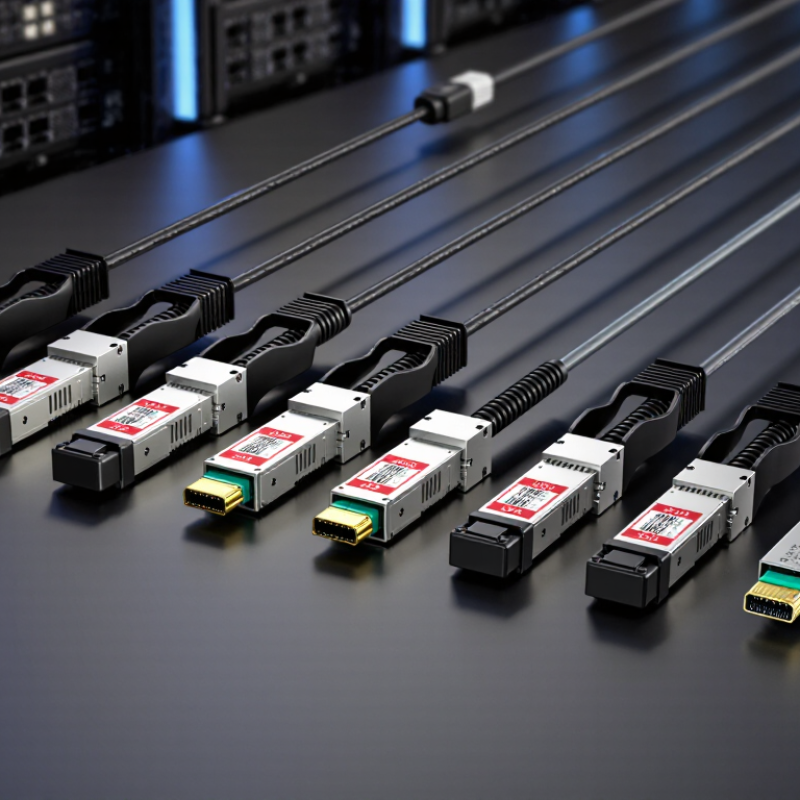
A Direct Attach Cable (DAC) connects nearby network equipment through fixed copper twinax conductors and transceiver-style ends. Unlike separate optical modules and fiber, it arrives as one assembly. Passive DACs carry signals without signal-conditioning electronics; active versions include circuitry to support longer runs or improve signal integrity. Check the cable’s supported data rate, connector type, and host compatibility before installation. Small details matter.
DACs are common inside data centers, where servers connect to top-of-rack switches and storage systems sit close to network ports. A short cable can reduce component count and simplify a crowded rack. For example, a one-meter link may fit neatly between adjacent devices, while a longer cable can obstruct airflow or complicate cable management.
DACs are not ideal for every path: copper reach is limited, and tight bends or dense bundles can affect installation quality. The practical trade-off deserves attention.
Tips: Measure the actual route, including bends and service loops, before choosing cable length. Keep airflow clear, respect the supplier’s bend-radius guidance, and confirm both connected devices recognize the cable. Test links under expected traffic; a link light alone does not prove stable performance.

China’s Direct Attach Cable Manufacturing Landscape is shaped by dense electronics supply chains and rising data-center connectivity needs. Synergy Research Group counted more than 1,100 hyperscale data centers worldwide by the end of 2024. That figure signals a broad market, not China’s share. Direct attach cables commonly serve short links between switches and servers, where copper can offer a practical alternative to optics.
On factory floors, capability is measured in details: consistent twinax geometry, clean connector termination, controlled impedance, and repeatable high-speed testing. A cable may look simple. Its performance is not. Buyers should check supported data rates, reach, power use, and host-device compatibility, then request test records for the intended configuration. Small production differences matter.
The picture remains incomplete. Public industry reports rarely separate China-made direct attach cables from wider cable-assembly output, so precise national market-share claims deserve caution. Manufacturers compete not only on unit price, but also on yield, customization, delivery reliability, and engineering support. That balance is difficult. A low-cost sample proves little unless the same signal quality holds across production batches.
China Top 10 Direct Attach Cable Manufacturers
Key Criteria for Evaluating Cable Manufacturers
Choosing a direct attach cable manufacturer takes more than comparing prices. Check conductor material, cable length tolerance, shielding, and connector fit. A cable that looks correct may still run hot or fail link training. Ask for test reports covering insertion loss, return loss, and continuity. Confirm that each report matches the exact cable assembly, not just a similar model. Small details matter.
Evaluate process control and traceability, too. Can the supplier identify cable lots, connector batches, and inspection dates? Request samples from the intended production line, then test them in your own switches and servers. Confirm supported data rates, operating temperature, bend radius, and warranty terms in writing. Compare lead times with your deployment schedule. A fast quote is not a delivery plan. No checklist catches everything; a rushed sample review can miss fit problems in dense racks.
Tips: Photograph connector labels and cable routing during evaluation. Keep one sample for later comparison. Ask how failures are investigated, not only how often they occur. If an answer is vague, pause and verify it. A little extra checking can prevent costly rework.
Supplier-evaluation framework; the weights below are suggested and are not a verified manufacturer ranking.
| No. | Evaluation criterion | Suggested weight | Evidence to request | Practical evaluation guidance |
|---|---|---|---|---|
| 1 | Standards and interface compatibility | 15% | Product specifications, interface coding information, and test reports for the exact cable assembly and intended host equipment. | Check the required form factor, data rate, cable length, connector type, and host compatibility. Standards and MSA requirements depend on the specific interface; verify the applicable revision rather than relying on a general compatibility claim. |
| 2 | Electrical performance and signal integrity | 15% | Test data relevant to the product, such as insertion loss, return loss, crosstalk, and bit-error-rate results where applicable. | Compare results against the applicable interface specification and the buyer’s system requirements. Confirm the tested cable length and test setup match the proposed product. |
| 3 | Quality management and process control | 12% | Current quality-system certificates, process-control records, inspection plans, and corrective-action examples. | Check certificate scope, issuing body, validity, and whether the certified site is the one making the product. Ask how defects are contained, investigated, and prevented from recurring. |
| 4 | Product testing and traceability | 10% | Sample inspection reports, serial or lot-number format, test coverage, and records-retention policy. | Confirm that shipped units can be traced to production lots and that the supplier can provide relevant test records for a defined period. |
| 5 | Materials and environmental compliance | 10% | Declarations or test documentation applicable to the destination market, product configuration, and materials used. | Assess applicable requirements such as RoHS or REACH based on the product and market. Verify that documents cover the supplied model and are current; do not assume a declaration proves performance or safety beyond its stated scope. |
| 6 | Customization and engineering support | 9% | Documented options for cable length, jacket, labeling, packaging, and connector configuration, plus engineering-change procedures. | Confirm which changes require requalification, how revisions are controlled, and whether the supplier can provide samples for approval before production. |
| 7 | Production capacity and delivery performance | 9% | Capacity information, production lead-time assumptions, order-history metrics, and contingency plans. | Request recent, order-relevant on-time delivery data and clarify how lead times change with volume, customization, and component availability. Treat stated capacity as a claim to verify. |
| 8 | Warranty and after-sales support | 8% | Written warranty terms, return procedure, response channels, and failure-analysis process. | Compare coverage period, exclusions, remedy options, and response commitments. Ensure the terms identify who handles shipping, diagnosis, and replacement. |
| 9 | Supply-chain resilience | 6% | Critical-component sourcing controls, inventory policy, and documented disruption-response arrangements. | Discuss component obsolescence, approved substitutions, and notification before material or process changes. Evaluate whether the supplier can maintain consistent specifications during disruptions. |
| 10 | Commercial transparency and total cost | 6% | Itemized quotation, minimum order quantity, tooling or sample charges, payment terms, and shipping assumptions. | Compare like-for-like specifications and include testing, packaging, freight, duties, and support costs where relevant. Confirm quotation validity and any volume-based price conditions. |
| Total suggested weight | 100% | Apply the same evidence-based scoring method to every supplier being considered. | ||
China’s direct attach cable sector is best understood through product capability, not broad claims about scale. These ten manufacturer profiles compare passive copper assemblies, cable lengths, lane configurations, connector options, and production testing. Buyers should check insertion loss, crosstalk, and bend performance against the intended switch or server setup. Small differences matter.
Demand provides useful context, but it is not a DAC sales measure. Synergy Research Group reported that global cloud infrastructure services spending reached about $330 billion in 2024, up 22% year over year. That growth supports investment in data-center networks, yet it does not prove equal growth in copper cabling. The distinction is easy to miss.
A practical profile also examines traceability, sample consistency, and response to custom-length requests. At higher data rates, signal integrity and thermal conditions deserve close attention; a cable that works on a bench may behave differently in a crowded rack. Public specifications are uneven, which makes clean supplier rankings difficult. Some details remain unclear. Comparing test methods can reveal more than comparing headline speeds.
Comparing Product Range, Certifications, and Market Reach
Comparing ten direct attach cable manufacturers in China is more useful when you examine evidence, not rankings alone. Check whether each supplier offers passive and active DAC options, supported data rates, cable lengths, and connector types. A clear product matrix can reveal gaps quickly. Small details matter. Ask for sample test reports and confirm which product families each certification covers. A certificate for one cable does not automatically apply to every configuration.
Market reach is more than a list of export destinations. Review stated production capacity, typical lead times, packaging options, and access to technical support in your region. If possible, test a sample in the intended switch or server setup; compatibility can vary with equipment and firmware. A polished catalogue is helpful, but it cannot replace practical checks. Supplier information may also be incomplete, so note unanswered questions rather than assuming the best.
Tips: Request the same specifications from every supplier, including length, wire gauge, power limits, and compliance documents. Compare like with like. Check that quoted delivery times include inspection and shipping, and ask how defects are handled. One limitation: public information may not show real production consistency. A small pilot order can offer a clearer picture.
© 2025 EXCELSIUS MEDICAL All rights reserved
Taiwan Office
2F., No. 18, Ln.31, Sec.1, Huandong Rd.,
Xinshi Dist., Tainan City 744, Taiwan, R.O.C.
German Office
Zeppelinstr. 4, Haus 3&4,
D-85399 Hallbergmoos, Germany
