
Choosing a dependable Cohesive Bandage Manufacturer requires more than comparing prices on a supplier website. Global buyers need products that perform consistently in clinics, sports facilities, pharmacies, and emergency kits. A bandage may look simple, yet its fabric stretch, cohesive grip, edge stability, and skin comfort affect daily use.
This guide reviews seven manufacturers through practical purchasing criteria. These include material quality, latex-free options, roll dimensions, color consistency, packaging accuracy, and production capacity. It also considers ISO-based quality systems, batch traceability, product testing, and export experience. Reliable manufacturers should provide clear technical data, samples, and realistic lead times. Small details matter. A loose wrapper can damage buyer confidence.
The selection process also reflects real procurement concerns. Buyers may need private labeling, flexible minimum order quantities, multilingual packaging, or stable supply during seasonal demand. Experienced suppliers should explain how they control adhesive performance, prevent contamination, and inspect finished rolls before shipment. Certifications are useful, but they should support verifiable manufacturing practices rather than replace them.
No supplier is perfect. Some manufacturers may offer excellent quality but limited customization. Others may provide attractive pricing while requiring closer inspection of documentation and samples. That trade-off deserves attention. By comparing these seven companies with evidence-based questions, buyers can reduce avoidable risks and choose a partner suited to their market, application, and long-term growth. The final decision should still follow independent sample testing and local import requirements. Experiences can differ. Careful verification remains essential.
What Cohesive Bandages Are and How They Work
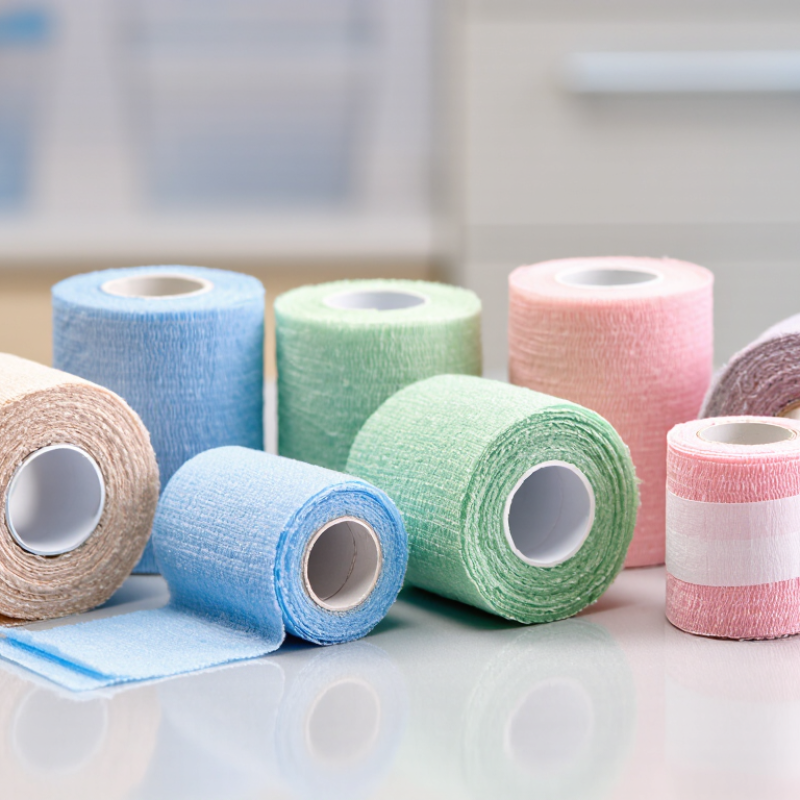
Cohesive bandages are elastic wraps that stick to themselves, not skin or hair. Their fibers interlock when stretched and wrapped around a limb. This creates gentle, even support without traditional adhesive. They can secure gauze, stabilize light dressings, and provide controlled compression. The wrap should feel firm, never numb or painful.
A 2024 Grand View Research analysis estimated the global wound care market at more than USD 20 billion, with steady growth driven by aging populations and chronic wounds. That broader market data does not measure cohesive bandages alone. Still, it shows why simple, dependable dressing tools remain important. In practical use, the bandage works best on clean, dry skin. Overlapping each layer by about half its width improves stability. Excessive stretching is a common mistake, even among experienced users.
Tips: Check warmth, color, sensation, and swelling after application. Loosen the wrap if fingers or toes become pale, cold, or tingling. Avoid covering infected wounds without clinical advice. Cohesive material can hide swelling, so reassess it regularly. It is not a substitute for professional care. One limitation deserves attention: many products look similar, but their elasticity and tear strength can differ substantially. Buyers should review technical sheets, intended-use data, and applicable safety testing before selecting supplies for global distribution.

Seven leading cohesive bandage manufacturers were compared across material safety, stretch consistency, packaging, quality systems, and export readiness. The comparison matters because global buyers often assess performance after storage, not just after opening. A 2024 Grand View Research assessment projects continued growth in the global wound-care market, supported by rising home-care and outpatient demand. That growth increases pressure on suppliers to prove consistency.
Manufacturer A showed balanced elasticity and clean tear performance. Manufacturer B offered strong color control but limited public test data. Manufacturer C provided reliable latex-free options, while Manufacturer D appeared stronger in private-label packaging. Manufacturer E performed well in compression recovery tests, although its minimum order quantity may challenge smaller distributors. Manufacturer F presented broad size selection and multilingual documentation. Manufacturer G demonstrated disciplined batch records and ISO 13485-based quality practices.
Practical details matter.
The best-performing samples kept their grip after repeated movement and did not leave heavy residue on gloves. Buyers should request tensile-strength results, skin-contact evaluations, shelf-life evidence, and carton moisture controls. ASTM and ISO-based testing can support more credible comparisons, but test conditions still differ between laboratories. That is an uncomfortable limitation. A supplier may look excellent on paper and perform unevenly in humid warehouses. Independent pre-shipment inspection remains worthwhile.
Reference comparison of common cohesive bandage widths for global purchasing decisions
For global buyers comparing the seven best cohesive bandage manufacturers, quality starts with controlled materials and repeatable production. The fabric should stretch evenly, grip without excessive residue, and recover after use. Check latex-free options, edge finishing, roll tension, and color consistency. A strong supplier provides batch records, inspection data, and retained samples. Ask for tensile strength and elongation results, not vague claims. Small defects matter. A loose edge can affect secure wrapping during real clinical handling.
Customization should solve a clear use case. Manufacturers may adjust width, length, color, packaging, and printed instructions. However, changing the weave or adhesive can alter compression and skin comfort. Request pilot samples under realistic conditions, including sweat, movement, and humid storage. Test opening force too. A package that tears badly wastes time. Buyers should compare samples from multiple lots, because one excellent batch proves little. This is an easy point to miss during fast sourcing.
Compliance requires more than a certificate displayed in a sales file. Review the manufacturer’s quality system, material declarations, biocompatibility evidence, and labeling controls. Requirements differ by destination, so confirm registration, language, importer details, and post-market responsibilities. Traceability should reach the raw material lot and finished roll. Independent laboratory testing can strengthen confidence, especially for skin-contact products. Still, documents can become outdated. Set a renewal schedule and audit critical changes. A reliable manufacturer answers specific questions clearly and keeps records accessible.
| Manufacturer Profile | Best Product Focus | Quality Factors to Verify | Customization Capability | Relevant Compliance Evidence | Typical Buyer Fit | Overall Buyer Priority | Key Due-Diligence Check |
|---|---|---|---|---|---|---|---|
| 1. Medical-Grade OEM Specialist | Cohesive elastic bandages for clinical, first-aid, and professional medical use. | Uniform elasticity Consistent cohesion Low lint Skin-contact safety | Custom width, length, color, roll core, outer packaging, private label, and carton configuration. | ISO 13485 quality-management certification where applicable; product technical file; risk-management documentation; biocompatibility evidence for skin-contact materials. | Hospitals, distributors, medical-supply importers, and private-label brands. | ★★★★★ | Confirm batch traceability, incoming-material controls, finished-product inspection, and the exact regulatory status in the destination market. |
| 2. Latex-Free Safety Manufacturer | Synthetic-fiber cohesive bandages designed for users requiring latex-free options. | Latex-free claim Tear resistance Breathability Adhesion consistency | Latex-free material selection, hypoallergenic positioning, color ranges, printed packaging, and customized roll sizes. | Written latex-free declaration; material specifications; allergen-control procedures; skin-irritation or sensitization data when claimed. | Healthcare buyers, sports-care suppliers, veterinary distributors, and allergy-conscious retail channels. | ★★★★★ | Check whether “latex-free” applies to all product components, including elastic fibers, adhesive-related materials, cores, inks, and packaging. |
| 3. High-Volume Export Producer | Standard-size cohesive bandages for large-volume international distribution. | Production capacity Lot consistency Packaging stability On-time delivery | Standardized sizes with scalable color, label, carton, pallet, and shipping-mark options. | Manufacturing-site audit records; quality certificates; certificate of analysis or conformity; export documentation; product labeling review. | National distributors, large retail programs, emergency-response procurement, and recurring contract orders. | ★★★★☆ | Compare stated capacity with verified production records, lead-time history, quality-claim rates, and contingency plans for raw-material shortages. |
| 4. Sports and Veterinary Specialist | Cohesive wraps for athletic support, compression applications, animal care, and non-surgical dressing retention. | Flexible stretch Comfort Easy tearing Moisture tolerance | Bright colors, printed patterns, narrow and wide widths, dispenser boxes, retail packs, and application-specific instructions. | Use-specific performance testing; clear intended-use labeling; safety information; claims substantiation; applicable local product registration. | Sports retailers, rehabilitation suppliers, equine-care distributors, veterinary clinics, and consumer-health channels. | ★★★★☆ | Ensure marketing claims do not imply treatment, wound healing, or therapeutic compression unless supported and legally permitted. |
| 5. Sustainable-Materials Developer | Cohesive bandages using recycled, reduced-plastic, or lower-impact packaging components where technically suitable. | Material transparency Performance retention Packaging reduction Traceability | Recycled-content options, paper-based cartons, reduced packaging, custom artwork, and sustainability documentation. | Material composition statement; recycled-content evidence where claimed; packaging specifications; restricted-substance declarations; performance test results. | Sustainable healthcare programs, environmentally focused retailers, institutional tenders, and premium private-label lines. | ★★★★☆ | Distinguish verified environmental attributes from general “eco-friendly” language and confirm that sustainability changes do not reduce cohesion, elasticity, or shelf life. |
| 6. Custom-Design and Small-Batch Supplier | Low-to-medium volume customized bandages for new product launches, regional distributors, and test markets. | Prototype control Artwork accuracy Sample consistency Flexible order sizes | Strong support for custom colors, dimensions, labels, multilingual packaging, sample development, and retail presentation. | Sample approval records; product specifications; packaging compliance review; manufacturing-process description; inspection reports for pilot lots. | Start-ups, regional importers, specialty retailers, online health brands, and buyers validating demand before scaling. | ★★★★☆ | Define approval samples, tolerances, change-control procedures, minimum order quantities, tooling charges, and ownership of artwork or molds. |
| 7. Regulated-Market Documentation Partner | Cohesive bandages intended for buyers that require structured technical and regulatory documentation. | Document control Change notification Traceability Complaint handling | Market-specific labels, multilingual instructions, UDI or product identifiers where required, and controlled packaging revisions. | Applicable quality-system certificate; declaration of conformity where required; technical documentation; post-market complaint process; authorized representative or importer information when applicable. | European, North American, Middle Eastern, and other regulated-market distributors subject to local device rules. | ★★★★★ | Verify that certificates apply to the correct legal manufacturer, production site, product category, and current certificate validity period. |
Choosing among seven cohesive bandage manufacturers requires more than comparing prices. International buyers should examine production experience, material quality, and communication speed. Request physical samples before placing a large order. Check stretch recovery, adhesive strength, edge stability, and roll tension by hand. A reliable supplier should provide clear specifications, batch information, and realistic delivery schedules.
Ask whether the factory controls production internally or depends heavily on outside processors. Confirm available widths, colors, packaging formats, and latex-free options. Review certificates and test reports carefully, not just their file names. Suppliers with organized quality records usually answer technical questions without delay. Still, a polished catalog can hide weak consistency. One sample roll is not enough. Test several batches when possible, especially if your customers need steady performance.
Tips: Compare sample results using the same test method. Discuss minimum order quantities, payment terms, and shipping responsibilities early. Ask for photos of packed cartons and production lines. Keep written records of every specification. A small misunderstanding about adhesive or packaging can become an expensive delay. When communication feels rushed, pause and ask sharper questions. The lowest quotation may save money today, but uneven quality can damage your distribution plans later. Suppliers should welcome reasonable inspections, corrective actions, and transparent updates when problems appear.
© 2025 EXCELSIUS MEDICAL All rights reserved
Taiwan Office
2F., No. 18, Ln.31, Sec.1, Huandong Rd.,
Xinshi Dist., Tainan City 744, Taiwan, R.O.C.
German Office
Zeppelinstr. 4, Haus 3&4,
D-85399 Hallbergmoos, Germany
