
A first spoonful of pear can land on a baby’s chin, sleeve, and the chair. That small mess is part of learning to eat, but repeated outfit changes can make mealtimes feel harder than they need to be. A Silicone Baby Bib is a soft, waterproof bib, usually shaped with a pocket that catches some falling food. It offers a practical layer of protection without replacing close supervision or a safe feeding setup.
Baby-led-weaning expert Gill Rapley’s child-led approach offers a useful principle: let babies explore food, while making the cleanup manageable. A well-fitting bib can support that goal. Its flexible silicone may sit comfortably against a baby’s chest, and the open pocket can collect soft pieces of banana or crumbs—though it will not catch everything. Some food still ends up on the floor. That is normal, not a product failure.
This guide looks at what a Silicone Baby Bib is, how its material and design work, and why caregivers choose one for everyday meals. It also considers practical details: neck fit, pocket shape, cleaning, and storage. Silicone can be easy to rinse, but residue may linger in seams or folds, so a quick visual check matters. No bib makes feeding effortless. Choosing one that fits your child and routine can make the messy parts a little more manageable.
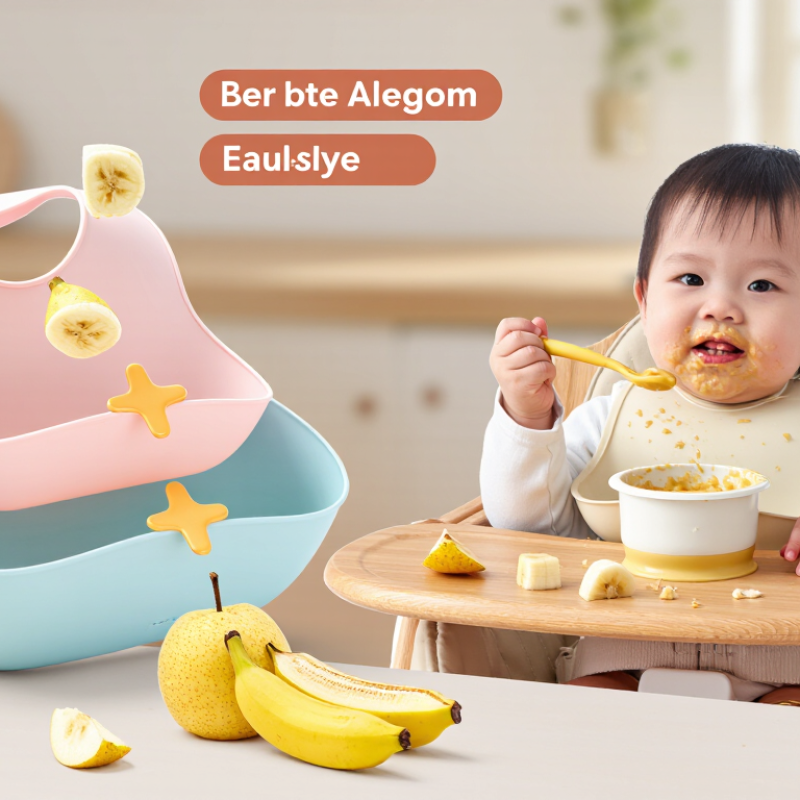
A silicone baby bib is a soft, flexible garment worn over a baby’s chest during meals. Food-grade silicone is water-resistant and easy to wipe, though crumbs may cling around its folds. Most designs have a broad neck opening, adjustable fasteners, and a curved pocket at the bottom. That pocket catches falling pieces of banana, oatmeal, or soft vegetables before they reach the floor. It helps contain mess, but it cannot prevent choking or replace close supervision.
The World Health Organization recommends introducing complementary foods at around six months, while continuing breastfeeding or suitable infant feeding. Its 2023 Global Breastfeeding Scorecard estimated that 48% of babies under six months worldwide were exclusively breastfed. As families move toward solid foods, a bib can make cleanup easier without changing what or how much a baby eats. Choose a soft, smooth design with a pocket that stays open when the baby leans forward. Check the fit at the neck; a bib should not feel tight or rub the skin.
Tips: Place the pocket outward before serving food, and wash the bib after each meal. Inspect the fasteners and surface for damage. A small detail can be easy to miss: a folded pocket may catch very little.

What Is a Silicone Baby Bib and Why Use One?
How Silicone Bibs Differ from Cloth, Plastic, and Disposable Bibs
A silicone baby bib is a flexible, washable bib, usually shaped with a pocket to catch dropped food. Unlike cloth, it does not absorb liquid, so a spill may slide into the pocket or onto the high-chair tray. Cloth feels soft and absorbs drips, but it can stain and needs laundering after messy meals. Some plastic bibs are lightweight, though stiffer designs may sit less comfortably around a moving baby’s neck. Small details matter.
Disposable bibs are convenient for outings, but each meal can mean another item thrown away. The broader waste picture deserves care: the US Environmental Protection Agency’s 2018 Advancing Sustainable Materials Management report counted 82.2 million tons of containers and packaging in municipal solid waste, or 28.1% of the total. That figure covers packaging overall, not baby bibs specifically. Silicone is reusable, but it is not automatically the best choice for every family or every environmental measure. Rinse food from the pocket, wash the bib as directed, and check its edges and fasteners for damage. Sticky food can cling, and a determined baby may tug it off. That happens.
A silicone baby bib is a reusable bib made from flexible silicone, often designed with a pocket to catch falling food. The comparison below describes common material characteristics; construction and care instructions vary by product.
| Dimension | Silicone Bib | Cloth Bib | Plastic Bib | Disposable Bib |
|---|---|---|---|---|
| Typical material | Flexible, non-absorbent silicone | Absorbent fabric, such as cotton or a fabric blend | Usually a wipe-clean plastic sheet or coated fabric | Usually paper or another lightweight absorbent layer, sometimes with a moisture-resistant backing |
| Handling spills | Does not absorb liquid; helps keep food and drips off clothing when it covers the area well | Absorbs drool and small spills, but can become damp or soaked | Typically resists liquid; coverage and leak protection depend on its design | Can absorb some mess; performance depends on its layers and construction |
| Food-catching pocket | Common feature; a shaped pocket can catch dropped pieces of food | Often absent or less structured, though some designs include one | May have a pocket, depending on the design | Some styles have a pocket; many are simple flat bibs |
| Cleaning and reuse | Usually easy to wipe or wash and reuse; follow the product’s care directions | Reusable, but generally needs laundering after use | Often wipe-clean and reusable; check whether it is machine washable | Designed mainly for one-time use and disposal |
| Comfort and feel | Flexible but may feel heavier or warmer than fabric to some babies | Soft and familiar; fabric can feel damp after absorbing spills | Feel varies; some styles may be stiffer or crinklier than fabric | Lightweight, but may shift or tear depending on construction |
| Useful for | Messy meals at home or when a reusable, wipe-clean option is convenient | Drooling, light spills, and situations where a soft, absorbent bib is preferred | Meals when wipe-clean coverage is wanted and the bib’s fit suits the child | Travel or occasional outings when carrying a used bib home is inconvenient |
| Waste considerations | Reusable; cleaning and eventual disposal still use resources | Reusable; laundering uses water and energy | Reusable; end-of-life options depend on the material and local recycling rules | Creates ongoing single-use waste |
| What to check before use | Fit, neck fastening, age guidance, and cleaning instructions | Fit, fabric-care instructions, and secure fastenings | Fit, material information, edges, and cleaning instructions | Fit and age guidance; keep packaging away from children |
Safety note: Use a bib only while the child is awake and supervised. Remove it after the meal, and follow the manufacturer’s instructions for fit, cleaning, and age suitability.
The World Health Organization recommends introducing complementary foods at around 6 months, while continuing breastfeeding. At this age, breast milk alone may no longer meet a baby’s growing nutritional needs. New foods should be soft, safe to manage, and offered in ways that suit the child’s development. A silicone bib often becomes useful when those early meals begin. It catches drips of purée and soft cereal before they reach a clean shirt or the chair.
A silicone bib is usually flexible, wipeable, and fitted with a pocket to collect fallen food. It can make cleanup easier, but it will not catch every spoonful. Some food will land on the floor. That is part of learning, though parents may still find it tiring. Keep the bib comfortable and check that its edges or fastenings do not irritate the baby’s skin. Stay nearby during meals; a bib is not a substitute for supervision. Clean and inspect it regularly, following its care instructions.
Tips: Offer small portions and let your baby explore at their own pace. Sit the bib pocket open, not folded against the chest. If your baby dislikes wearing it, pause and try again later.
WHO recommends introducing complementary foods at around 6 months, when a silicone bib may become useful during meals.
This timeline summarizes WHO guidance: exclusively breastfeed for the first 6 months, then introduce complementary foods while continuing breastfeeding to 2 years or beyond. The 6-month mark is a feeding milestone, not a specific recommendation about bibs.
What Is a Silicone Baby Bib and Why Use One?
Food-Contact Safety: What FDA Regulation 21 CFR 177.2600 Covers
A silicone baby bib is a flexible, wipe-clean feeding garment with a pocket that catches dropped food. Its smooth surface can make cleanup easier after mashed banana or oatmeal. But “silicone” alone does not prove a bib is suitable for food contact. The details matter.
FDA regulation 21 CFR 177.2600 addresses rubber articles intended for repeated use in contact with food. It specifies permitted substances and limits on substances that may be extracted under stated test conditions. The regulation may be relevant to silicone rubber products, but it is not a universal safety certificate for every bib. Check the maker’s food-contact statement and care instructions, and ask what testing or compliance information supports the claim. Small details can be easy to miss. Also, this regulation does not assess every practical concern, such as whether a bib fits securely or stays intact after repeated washing.
Tips: Look for clear repeated-use food-contact information. Wash the bib before first use, inspect seams and the pocket for damage, and replace it if the material becomes torn or sticky. A quick rinse helps, though dried food can still cling in folds.
A silicone baby bib is a flexible, wipeable covering designed to catch food during meals. When choosing one, look for smooth edges, a comfortable adjustable neck, and a pocket that stays open without pressing against the baby’s body. Check the fit with the baby seated; it should feel secure, not tight. Fit matters. A bib that is too large may bunch under the chin, while a shallow pocket may let soft food slide onto the floor.
Before each meal, fasten the bib gently and make sure the pocket faces outward. Keep the baby seated and within arm’s reach while eating. The bib can catch crumbs and drips, but it cannot prevent choking or replace close supervision. It won’t catch everything. I find it easy to expect a deep pocket to solve every mess; in practice, food can still land on sleeves, the chair, or the floor.
After eating, rinse away stuck-on food, then wash the bib with warm water and dish soap. Use a dishwasher only if the care instructions say it is safe. Let the bib dry fully, especially around the neck fastener and pocket folds. Check regularly for tears, rough edges, or a damaged clasp, and stop using it if you find any. Silicone is easy to clean, but not self-cleaning.
© 2025 EXCELSIUS MEDICAL All rights reserved
Taiwan Office
2F., No. 18, Ln.31, Sec.1, Huandong Rd.,
Xinshi Dist., Tainan City 744, Taiwan, R.O.C.
German Office
Zeppelinstr. 4, Haus 3&4,
D-85399 Hallbergmoos, Germany
