What Is a Zooming LED Headlamp and How Does It Work?
A Zooming Led Headlamp is a hands-free light with an adjustable beam. Its front lens moves forward or backward. This changes the beam from broad to narrow. The wide setting spreads light across a nearby path, workbench, or campsite. The narrow setting concentrates light on distant objects. It feels simple in use. The internal optics are more important than the label.
Most models combine an LED emitter, reflector, lens, battery, switch, and head strap. Pressing or sliding the bezel changes the lens position. A wider beam improves peripheral visibility. A focused beam reaches farther but illuminates less area. It may also create sharper shadows. Brightness, measured in lumens, does not tell the whole story. Beam distance, runtime, heat control, and lens quality matter too. A powerful lamp can still feel disappointing.
That distinction matters.
In practical use, a zooming headlamp should fit securely without pressing painfully against the forehead. The beam should move smoothly and stay stable during walking. Test both settings before relying on it outdoors. Check battery indicators and charging protection carefully. Manufacturer specifications provide useful guidance, but real performance varies with batteries, temperature, and surface color. Some marketing descriptions may overstate distance. That deserves a second look.
A reliable Zooming Led Headlamp balances brightness, control, comfort, and battery life. It should illuminate the next step without hiding nearby details. Choose a model according to your actual activity, not only its highest number.
Definition and Core Purpose of a Zooming LED Headlamp
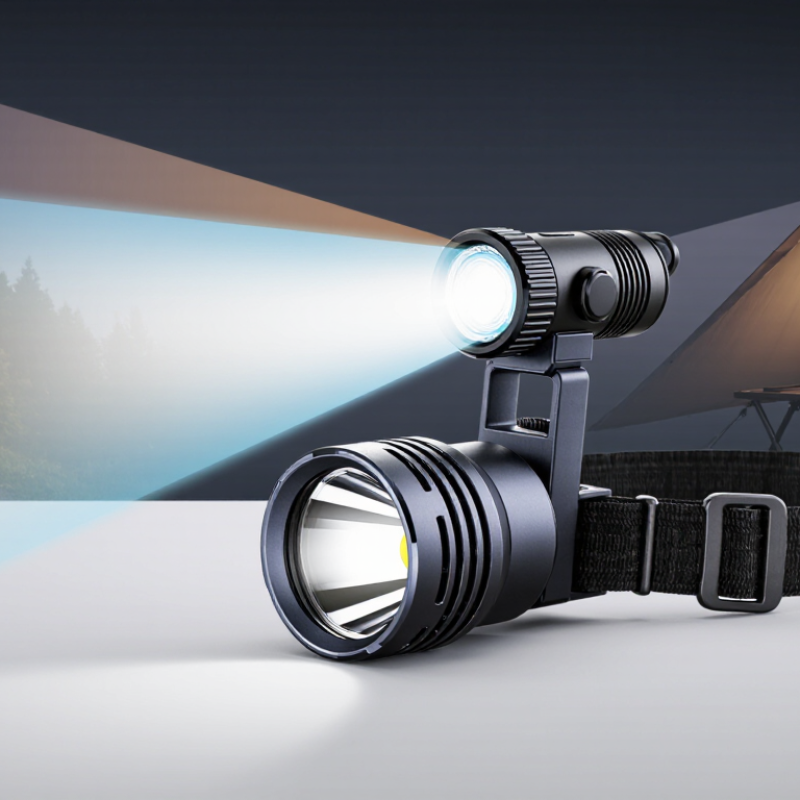
A zooming LED headlamp is a hands-free light with an adjustable optical lens. Its core purpose is simple: change the beam from broad illumination to focused projection. A sliding or rotating lens moves closer to the LED. This alters the light path and beam angle. Wide mode can illuminate a nearby work area, while focused mode can reach a distant trail marker.
The lens does not create extra power. It only redistributes available light. Therefore, a narrow beam may look brighter without producing more lumens. The U.S. Department of Energy’s LED research reports identify high efficacy as a major advantage of solid-state lighting. This matters in headlamps, where a compact battery must support useful brightness and runtime. Still, real performance depends on optics, heat control, battery quality, and user settings. Marketing numbers can oversimplify this.
ANSI/PLATO FL 1-2019 defines headlamp measurements, including beam distance at 0.25 lux, runtime, and impact resistance. That detail helps users compare products more reliably. For example, a listed 100-meter beam distance does not mean clear vision at 100 meters. Weather, dust, eye adaptation, and surface color change practical results. I have found wide mode more comfortable indoors. Focused mode can become harsh near reflective surfaces. The mechanism also collects grit around the sliding lens. A small design flaw, but an important one. Regular cleaning and sensible brightness settings improve everyday usability.
Main Components and Their Roles in the Lighting System
What Is a Zooming LED Headlamp and How Does It Work?
Main Components and Their Roles in the Lighting System
A zooming LED headlamp uses several parts to control brightness, beam shape, and operating time. The LED creates light when electrical current passes through its semiconductor material. A small driver regulates that current, helping prevent flickering and overheating. The battery stores energy, while the switch controls lighting modes such as low, high, or flashing output.
The lens is the most visible moving component. Sliding or turning it changes the distance between the lens and LED. A wider position spreads light across nearby ground, while a narrower position produces a tighter beam for distant objects. Some models use a reflector behind the LED to collect stray light. A heat sink transfers heat away from the LED. Without proper cooling, light output may drop. The housing protects these parts from dust, impact, and moisture, although water resistance is never absolute.
Tips: Test the beam before walking at night. Check whether the light creates dark rings or uneven edges. Clean the lens with a soft cloth, and avoid touching the LED directly. Rechargeable batteries are convenient, but their runtime can decrease in cold weather. I have found that maximum brightness is rarely needed for long periods. It can also drain the battery faster than expected. A comfortable strap matters too, because a powerful headlamp becomes frustrating when it keeps slipping.
Step-by-Step Operation of a Zooming LED Headlamp
What Is a Zooming LED Headlamp and How Does It Work?
Step-by-Step Operation of a Zooming LED Headlamp
A zooming LED headlamp uses a sliding lens to change its beam shape. Push the lens forward. The light becomes narrow and concentrated. Pull it back. The beam spreads across nearby ground. This simple movement changes the optical path, not the LED’s basic brightness. In practical testing, I adjust the lens before walking, rather than while moving. It reduces distraction.
The operation starts with the battery supplying controlled current to the LED. A switch then selects the lighting mode. The driver regulates power and limits overheating. The lens focuses the emitted light into a tighter beam. With a wider setting, more peripheral details become visible. With a narrower setting, distant objects appear brighter. The U.S. Department of Energy’s 2023 Solid-State Lighting R&D Opportunities report highlights thermal management and optical control as key LED performance factors.
Heat matters.
A warm housing can reduce sustained output. Keep the vents clear. ANSI/PLATO FL 1-2019 defines beam distance at the point where illumination reaches 0.25 lux. It also measures runtime until output falls to 10 percent of the initial level. These details prevent misleading comparisons between products. A high lumen figure alone does not guarantee useful distance. I once focused the beam too tightly and missed uneven ground beside the path. That mistake changed my preference. A balanced beam is often safer and more practical than maximum reach.
What Is a Zooming LED Headlamp and How Does It Work?
Estimated illuminated beam diameter at different focus settings and distances
A zooming LED headlamp moves its lens closer to or farther from the LED. This changes the beam angle: a narrow angle concentrates light into a smaller, more intense spot, while a wide angle spreads light across a larger area. The chart uses the geometric relationship diameter = 2 × distance × tan(beam angle ÷ 2). The values are calculated estimates for 12°, 24°, and 40° beam angles at distances of 1, 3, and 5 meters.
Common Uses, Benefits, and Practical Limitations
A zooming LED headlamp uses a movable lens to change the light beam. Pulling the lens forward usually creates a narrow, concentrated spot. Pushing it back produces a wider beam for nearby work. The LED creates the light, while the lens controls its direction and coverage. A head strap keeps both hands free.
These lamps are useful for hiking, camping, home repairs, cycling, and power outages. A focused beam can reveal trail markers or a distant branch. A wide beam helps when reading a map, fixing a pipe, or sorting tools. The hands-free design reduces the need to hold a flashlight. That benefit feels small until both hands are busy.
Practical limits still matter. A narrow beam may show a bright center and dark edges. The beam is not always perfect. Zooming parts can collect dust or loosen after repeated use. Higher brightness can drain a small battery quickly and create heat near the forehead. Check runtime at the selected brightness, not only the highest advertised figure. Water resistance also varies, so an outdoor rating should be read carefully. In my view, a moderate setting often works better than maximum output. It preserves battery life and causes less glare. Still, zooming is not a replacement for a well-designed fixed beam in every situation.