10 Tips for Choosing the Best Lighting Products

Choosing the right Lighting Products can change how a room works, feels, and looks after dark. A kitchen needs clear task lighting over counters, while a bedroom often benefits from softer, layered light. The best choice is rarely the brightest one. It is the one that fits the space and its daily use.

Lighting pioneer Thomas Edison is often credited with saying, “We will make electricity so cheap that only the rich will burn candles.” His remark reflects how dramatically lighting has changed, but modern choices involve more than replacing candles. Buyers now weigh brightness, color temperature, color accuracy, energy use, glare, and dimmer compatibility. Each detail matters. A warm bulb may make a living room feel calm, yet feel too yellow above a workbench.

This guide explores ten practical tips for comparing Lighting Products with confidence. It looks at room purpose, fixture placement, light output, and the specifications printed on product labels. Those numbers can help, but they do not tell the whole story. A high lumen rating cannot fix a poorly aimed fixture, and even efficient lighting can feel uncomfortable if it creates harsh shadows. Small details count. No checklist can predict every room perfectly. Still, measuring the space, checking compatibility, and comparing credible product information can prevent expensive mismatches. A little testing before buying often saves regret later.
10 Tips for Choosing the Best Lighting Products

Define the Lighting Needs of Each Room

Define what each room needs before choosing a fixture. Start with function. In a kitchen, bright, even light helps reveal food colors and keep counter work comfortable. Add focused lighting above prep areas, and check that cabinets won’t cast shadows across the worktop.

For a living room, combine soft general light with a reading lamp beside the chair you actually use. A single bright ceiling fixture can feel harsh after sunset.

Bedrooms usually benefit from gentle, dimmable ambient light and a separate bedside lamp. In bathrooms, choose fixtures rated for their placement and provide clear light near the mirror, where shadows can make shaving or applying makeup harder.

Light output matters more than wattage, so compare lumens when assessing brightness. A high color-rendering index can also help colors look more natural.

Notice where daylight enters, too. A desk beside a window may need less daytime light, but glare on a screen can still be distracting. I’ve found that a quick sketch of furniture and tasks often catches problems early; it won’t capture everything, though. It’s easy to over-light a room when shopping by fixture appearance alone. Write down what needs illumination, when the room is used, and whether separate switches or dimmers would make daily routines easier.

Compare Brightness, Color Temperature, and Light Quality

Tip 1:Compare brightness in lumens, not watts. Watts measure power use; lumens describe visible light output. Match the product to the task: a reading desk needs a clear pool of light, while a hallway may need less. Check the fixture’s rated output, too. A bright bulb can still feel dim if its beam misses the work surface.

Tip 2:Choose color temperature for the room. The U.S. Department of Energy’s lighting guidance places warm white around 2700–3000 K, cool white around 3500–4100 K, and daylight around 5000–6500 K. Warm light can make a living room feel softer; cooler light may suit detailed work. These ranges are useful, not rules. I still misjudge color from packaging alone.

Tip 3:Look beyond color temperature to color quality. The Illuminating Engineering Society’s TM-30 method reports fidelity (Rf) and gamut (Rg), offering more detail than a single color-rendering score. Compare the product’s published test data when available, then view familiar objects under the light: a red book cover or a wooden tabletop can reveal dull or shifted colors. Check the actual room. A sample may look different at night.

Assess Energy Use, Lifespan, and Long-Term Costs

When comparing lighting products, look beyond the purchase price. Check the energy label and compare wattage with light output, measured in lumens. A lower-wattage option may provide similar brightness while using less electricity. Tip: estimate annual energy use from the product’s wattage, your daily hours of use, and your local electricity rate. A kitchen light used for five hours each evening deserves more attention than a closet bulb switched on briefly.

Lifespan claims can help, but treat them as estimates. Heat, frequent switching, and enclosed fixtures may affect how long a bulb performs well. Check whether the product suits the fixture and dimmer, if applicable. Tip: compare the stated operating hours, then consider how difficult replacement will be. A ceiling fixture above a stairwell can make a short-lived bulb inconvenient. Small details matter. I once focused too much on the advertised lifespan and overlooked access.

For long-term costs, add the purchase price, estimated electricity use, and likely replacement expenses. Use the same usage assumptions for each option; otherwise, the comparison can mislead. Tip: write down the numbers for a year, then extend them across the expected lifespan. Include disposal or labor costs where relevant. Estimates are imperfect, but even a simple comparison can reveal whether a cheaper product may cost more over time. That adds up.

10 Tips for Choosing the Best Lighting Products - Assess Energy Use, Lifespan, and Long-Term Costs

Use these benchmarks to compare general-purpose lamps. Values are typical estimates; check the product label for the actual output, compatibility, and rated life of each lamp.

# Selection tip Benchmark or example data What to consider
1 Compare lumens, not watts About 800 lumens is a common brightness target for replacing a traditional 60-watt household bulb. Lumens indicate light output. Choose the brightness you need, then compare the watts required to produce it.
2 Check energy use For roughly 800 lumens: LED about 9 W, CFL about 14 W, halogen about 50 W, and incandescent about 60 W. Lower wattage for similar brightness generally means lower electricity use.
3 Estimate annual electricity cost At 3 hours per day and $0.16/kWh: LED about $1.58/year; CFL $2.45; halogen $8.76; incandescent $10.51. Use your local electricity rate and expected daily use to calculate a more relevant estimate.
4 Compare light efficacy Typical ranges: LED 80–100 lm/W; CFL 50–70 lm/W; halogen 15–20 lm/W; incandescent 10–17 lm/W. Efficacy is lumens per watt. A higher value means more light output per unit of electrical power.
5 Check rated lifespan Typical rated lives: LED 15,000–25,000 hours; CFL 8,000–10,000; halogen 2,000–4,000; incandescent 750–1,000. Rated life is an estimate under specified test conditions; actual life can vary with use, heat, and switching.
6 Estimate replacement frequency At 3 hours daily for 10 years (10,950 hours): about 1 LED, 2 CFLs, 3–6 halogen lamps, or 11–15 incandescent lamps. Longer-lived lamps can reduce the effort and expense of replacing bulbs, especially in hard-to-reach fixtures.
7 Choose a suitable color temperature Common choices: 2700–3000 K for warm light, 3500–4100 K for neutral light, and 5000–6500 K for cool light. Choose based on the room and task. Color appearance can differ between products with the same stated temperature.
8 Check color rendering Many household lamps have a CRI of 80 or higher; CRI 90 or higher can be useful where accurate color appearance matters. A higher Color Rendering Index generally indicates more faithful color appearance, though CRI is not the only measure of light quality.
9 Verify dimmer and fixture compatibility Dimmable lamps should be identified as dimmable. LED lamps may require a compatible dimmer; enclosed fixtures may have temperature limits. Check the lamp and fixture instructions to reduce the risk of flicker, poor dimming, or overheating.
10 Compare estimated 10-year ownership costs Using the energy assumptions above and illustrative lamp prices of $5 LED, $3 CFL, $2 halogen, and $1 incandescent: about $21, $31, $94–$100, and $116–$120, respectively. This estimate includes electricity and replacement lamps, but excludes labor, taxes, and disposal. Replace the example prices and energy rate with your own figures.

Calculation assumptions: One lamp producing approximately 800 lumens, used 3 hours per day for 10 years; electricity costs $0.16 per kWh. The 10-year ownership estimates use the example purchase prices shown and the lifespan ranges above, so actual costs will vary.

Check Fixture Style, Compatibility, and Installation Requirements

Choosing a fixture starts with the room, not the product photo. A wide pendant can overwhelm a low ceiling, while a narrow shade may leave a dining table poorly lit. Looks matter. So does glare. I still find it easy to underestimate how much a clear shade exposes the bulb. Compare fixture dimensions with the room, then check where the light will land: a desk needs focused light; a hallway needs even coverage.

Compatibility is less visible, but it can make a beautiful fixture frustrating. Match the socket, bulb shape, voltage, and dimmer type. Check the fixture’s damp- or wet-location rating before using it near a shower or outdoors.

The U.S. Department of Energy’s 2020 U.S. Lighting Market Characterization estimated that LEDs made up 48% of installed lighting stock. Its LED guidance also notes that LEDs can use up to 90% less energy than incandescent bulbs. These figures support efficient choices, but they do not guarantee that a bulb will work with every dimmer.

Installation deserves a close look before checkout. Measure the ceiling box, available clearance, and fixture weight; a heavy pendant needs suitable support, not just a decorative cover. For recessed lights, confirm housing depth and insulation-contact ratings. Read the installation instructions, especially for sloped ceilings or damp areas.

If wiring or box capacity is uncertain, ask a qualified electrician. It costs time. It can prevent a poor fit.

Verify Safety Certifications, Warranty, and Product Quality

Before choosing a lighting product, check its safety certification and confirm the mark applies to the exact model. Look for the certifying organization and verify the listing through its official directory when one is available. A logo on a box is not enough. Details matter. Check that the product is rated for its intended location, especially near moisture or enclosed fixtures.

Tip: Read the warranty before purchase, not after a failure. Note its length, what parts are covered, and whether labor or shipping is excluded. Keep the receipt and product documents together. A long warranty may sound reassuring, but unclear claim steps can make it less useful. I would not treat warranty length alone as proof of quality.

Inspect product details that affect everyday use: secure wiring, clean joints, stable mounting parts, and clear installation instructions. For a bulb, check brightness, color temperature, and dimmer compatibility; for a fixture, inspect its finish and shade edges. If possible, test for flicker or unusual heat after installation, following the instructions. No checklist catches everything. Still, careful verification can reveal warning signs before the product is installed.

10 Tips for Choosing the Best Lighting Products

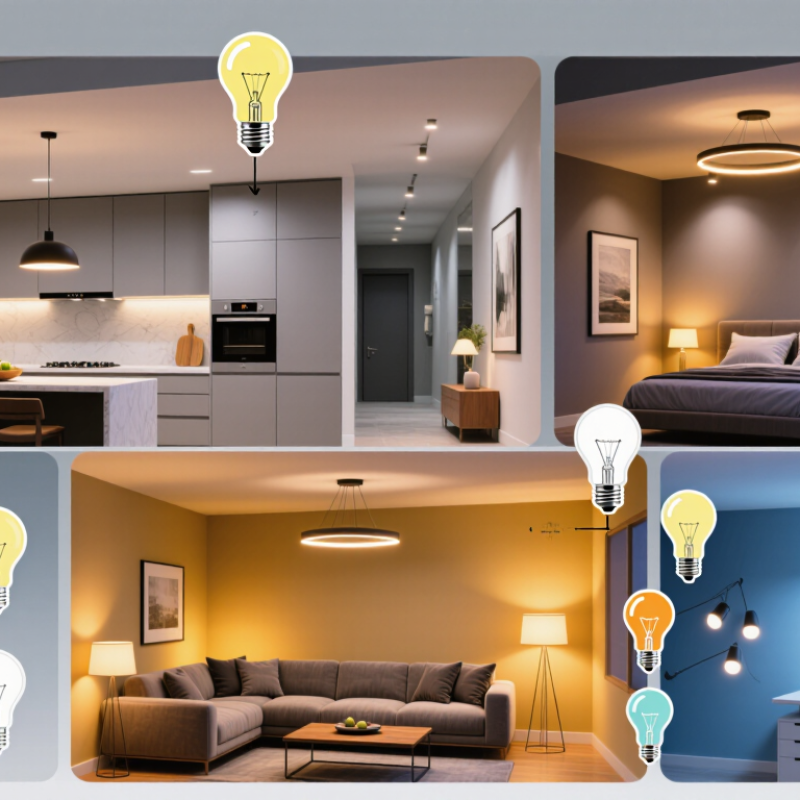
Verify safety certifications, warranty, and product quality. A useful quality check is to confirm that the package clearly states the lamp’s correlated color temperature (CCT). The chart shows nominal CCT values commonly used in ANSI lighting specifications.

These values describe the appearance of light, from warm to cool; they are not safety certifications. Before buying, verify applicable independent safety certification, review the written warranty, and compare product specifications with your needs.