2026 Top Types of Sconce Lights for Global Buyers

In 2026, Sconce Lights will move beyond simple wall decoration. Global buyers are examining visual comfort, energy use, installation flexibility, and long-term maintenance. The International Energy Agency reports that lighting represents roughly 15% of global electricity consumption. That figure makes efficient LED sconces commercially important, not merely fashionable. Grand View Research’s decorative lighting analysis also identifies smart controls, residential renovation, and hospitality projects as continuing demand drivers.

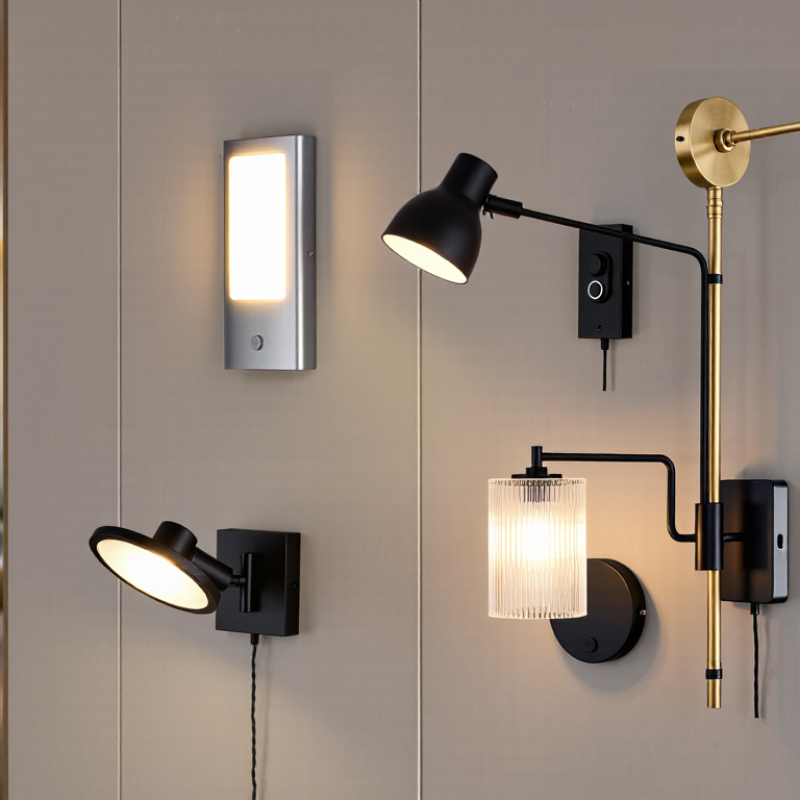
The strongest categories will likely include integrated LED wall sconces, rechargeable battery sconces, adjustable reading sconces, outdoor-rated models, and smart connected fixtures. Each serves a different purchasing situation. A hotel corridor needs durable light distribution. A bedroom needs glare control and warm color temperature. A restaurant may prefer dimmable brass or matte-black fixtures with replaceable components. Small details matter. A hidden driver, a stable wall plate, or a clean cable route can decide a project’s success.

Dr. Mariana G. Figueiro, a leading lighting and health researcher, has said, “Light is the most powerful cue for the circadian system.” Her research does not focus specifically on decorative sconces, but it offers valuable guidance for residential and hospitality buyers. Warm, adjustable Sconce Lights may support more comfortable evening environments. Still, product claims should remain careful. Not every “human-centric” label proves meaningful performance. Buyers should verify photometric files, color rendering, ingress protection, warranty terms, and certification documents. I may be overly cautious here. Yet many specifications look impressive until installation exposes weak drivers, harsh glare, or difficult maintenance. The best 2026 choices will balance appearance with measurable performance.
2026 Top Types of Sconce Lights for Global Buyers

Wall-Wash Sconces: 80–120 lm/W LED Efficiency and 25,000–50,000 h Life

Wall-wash sconces are becoming a practical choice for hospitality, retail, and residential projects in 2026. Their main advantage is controlled light across vertical surfaces, not simply decorative appearance. Quality LED models typically deliver 80–120 lm/W under real operating conditions. This range can reduce energy use while maintaining useful brightness. A 25,000–50,000 hour rated life also limits frequent replacement in corridors and high-ceiling areas. However, these figures depend on heat management, driver quality, and daily operating hours. Small details matter.

During project evaluations, I check beam spread, wall distance, color consistency, and dimming performance together. A narrow beam may create bright patches instead of a smooth wash. Not always. A well-designed optic should distribute light evenly from top to bottom, with minimal glare at eye level. For galleries and premium interiors, a CRI of 90 or higher can protect material and paint colors. Warm 2700–3000K light often suits hospitality spaces, while 3500–4000K can support offices and retail displays. Buyers should request photometric files, tested efficacy data, and warranty conditions before comparing prices. I have seen impressive lifetime claims weaken when fixtures operate in hot, poorly ventilated spaces. That remains an important design concern.

Task and Reading Sconces: 90+ CRI and 2700–4000 K for Visual Comfort

Task and reading sconces need more than attractive shapes. A 90+ CRI rating helps reveal the true color of paper, skin, and wood. The U.S. Department of Energy’s 2023 SSL R&D Opportunities report identifies color quality and glare control as continuing lighting priorities. For buyers, this supports a practical specification: choose CRI 90 or higher, then request TM-30 data, including Rf and Rg.

Color temperature changes the room’s visual character. A 2700 K sconce creates a warm, relaxed reading corner. At 3000 K, printed pages appear cleaner without feeling overly clinical. Around 3500–4000 K can support focused desk tasks, especially in offices or study areas with daylight. The IEA’s Energy Efficiency 2023 report notes that lighting uses about 15% of global electricity, making efficient LED selection important for large projects. Efficiency still needs comfort.

Look for a shielded diffuser, adjustable arm, and light directed onto the page, not into the eyes. A frosted lens can soften harsh points, though it may reduce output. That trade-off deserves testing. IES TM-30 measurements are useful, but they do not replace a real sample beside a book and laptop. Some 4000 K products feel too cold at night. Others at 2700 K may look pleasant but lack task clarity. Buyers should test flicker, shadowing, and glare at the actual desk height before approving a global order.

Vanity Sconces: IP44 Splash Protection and Even Vertical Illumination

Vanity sconces with an IP44 rating are designed to resist splashing water, making them a practical option near bathroom sinks. They are not made for immersion or direct, forceful water jets. Check the product’s installation instructions and the intended location before choosing a fitting. Bathroom conditions vary.

For more even vertical illumination, a pair of sconces beside the mirror usually works better than one light above it. Positioning them near face level can soften shadows under the eyes and chin. Exact height and spacing depend on the mirror, ceiling, and people using the room. A diffuser, such as opal glass, can help reduce glare while keeping light spread gentle. Small details matter.

Choose a color temperature that makes skin tones look natural, and check the stated color-rendering information where available. A bright lamp can still feel harsh if its beam points directly at the face. On site, the mirror may reflect a fitting more than expected, so test the layout before fixing positions. That extra check is easy to overlook. For final bathroom wiring and placement, consult a qualified electrician familiar with local requirements.

Outdoor Up- and Downlights: IP65 Dust-Tight and Water-Jet Protection

Outdoor up-and-downlights suit façades, entrances, courtyards, and hospitality exteriors. Their two-way beam creates a clear wall-washing effect without relying on tall poles. The International Energy Agency’s 2024 Energy Efficiency Market Report states that LEDs account for roughly half of global lighting sales. The U.S. Department of Energy also reports that LED lighting can use at least 75% less energy than incandescent lighting. For global buyers, this supports lower operating costs and longer replacement cycles.

IP65 matters—but it is often misunderstood. Under IEC 60529, the first “6” means dust-tight protection. The second “5” indicates protection against water jets. It does not mean safe underwater use. Check the gasket, cable gland, drainage path, and mounting surface before approval. A 10-minute rain test cannot replace proper installation.

Choose corrosion-resistant housing for coastal sites, and verify the declared operating temperature for hot climates. Narrow beams can sharpen architectural lines, while wider beams reduce harsh contrast on textured walls. Glare remains a common failure.

Small details matter. A poorly sealed cable entry can defeat a strong enclosure rating. One specification sheet is never enough. Request photometric files, test conditions, warranty terms, and independent safety documentation. The DOE’s solid-state lighting research repeatedly highlights thermal management as a major factor in LED performance. That is why heat dissipation deserves the same attention as brightness.

Global Buyer Checklist: 120 V/60 Hz, 230 V/50 Hz, and 220–240 V/50 Hz Standards

2026 Top Types of Sconce Lights for Global Buyers

Voltage and frequency deserve attention before choosing a sconce style. A fixture designed for 120 V/60 Hz may not work safely or reliably on a 230 V/50 Hz supply. Likewise, 220–240 V/50 Hz systems need fixtures and drivers rated for that input range. Check the product label and technical sheet, not just the packaging. A narrow voltage rating can mean extra sourcing work.

The power supply is only part of the check. Confirm whether the LED driver supports the local frequency, and verify dimmer compatibility if the installation uses one. Ask suppliers for input voltage, frequency, wattage, and wiring details in writing. For a sample order, inspect the markings on the fixture and driver, then have a qualified installer verify the site connection. Small details matter. A mismatched dimmer can cause flickering, even when the voltage appears correct.

Tips: Keep a market-specific checklist for 120 V/60 Hz, 230 V/50 Hz, and 220–240 V/50 Hz. Record the exact rating for each model and confirm it matches the destination. Check plug, mounting, and wiring requirements too; these can vary by project. Paperwork helps, but it may not capture every installation condition. Verify before shipment.